


Live auction - bmv_1076134 - TOURS (TURONUS CIVITAS) Denier

You must signin and be an approved bidder to bid, LOGIN TO BID. Accounts are subject to approval and the approval process takes place within 48 hours. Do not wait until the day a sale closes to register. Clicking on "BID" constitutes acceptance of the terms of use of cgb.fr private live auctions.
Bids must be placed in whole Euro amounts only. The sale will start closing at the time stated on the item description; any bids received at the site after the closing time will not be executed. Transmission times may vary and bids could be rejected if you wait until the last second. For further information check the Live auction FAQ
All winning bids are subject to a 18% buyer’s fee.
All winning bids are subject to a 18% buyer’s fee.
| Estimate : | 800 € |
| Price : | 580 € |
| Maximum bid : | 600 € |
| End of the sale : | 03 March 2026 15:36:40 |
| bidders : | 2 bidders |
Type : Denier
Date: fin du VIIIe siècle
Date: s.m.
Mint name / Town : Marmoutier à Tours (37)
Metal : silver
Diameter : 11,5 mm
Orientation dies : 7 h.
Weight : 1,03 g.
Rarity : R2
Coments on the condition:
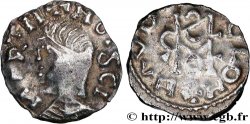
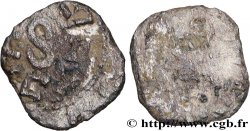
Ce denier est frappé sur un flan assez large et présente de hauts reliefs. Patine grise
Catalogue references :
Obverse
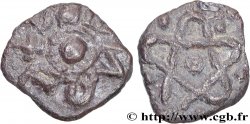
Obverse description : Monogramme.
Reverse
Reverse description : Croix ancrée.
Commentary
Ce denier est proche du Belfort 5671. Cette série est reprise par P. Schiesser dans son récent ouvrage sur le monnayage mérovingiens en argent, RT Sena n° 7, n° 49-51bis. Ce dernier remet en question l’attribution historique à Angers (cf. Monetae 1 pl. 7, p. 70) et met en valeur une “continuité visuelle” avec les deniers de Leugariaco. Depuis, nous avons montré que le monogramme du droit pourrait indiqué le monastère de Marmoutier. En effet, saint Martin se retira dans un ermitage à Marmoutier (actuellement Tours, au nord de la Loire). Un monastère y fut créé sur des ruines antiques. Il est bien attesté chez Grégoire de Tours (539-594) qui parle de “majus monasterium” (grand monastère). Ce monastère était autrefois en périphérie de Tours, d’où l’absence de référence à Tours (TVRONVS), mais la référence à Saint-Martin et au “grand monastère” par le biais du monogramme du droit. On retrouve en effet ce monogramme sur des deniers avec MOI SCI MARTIN (Monastère de saint Martin) et du monétaire Naudegiselo.
This denier is similar to Belfort 5671. This series is discussed by P. Schiesser in his recent work on Merovingian silver coinage, RT Sena no. 7, nos. 49-51bis. Schiesser challenges the historical attribution to Angers (cf. Monetae 1 pl. 7, p. 70) and highlights a “visual continuity” with the deniers of Leugariaco. Since then, we have shown that the monogram on the obverse could indicate the monastery of Marmoutier. Indeed, Saint Martin withdrew to a hermitage at Marmoutier (present-day Tours, north of the Loire). A monastery was established there on ancient ruins. It is well attested in Gregory of Tours (539-594), who speaks of a “majus monasterium” (great monastery). This monastery was once located on the outskirts of Tours, hence the absence of any reference to Tours (TVRONVS), but the reference to Saint Martin and the “great monastery” through the monogram on the obverse. This monogram is indeed found on coins bearing the inscription MOI SCI MARTIN (Monastery of Saint Martin) and the mint mark Naudegiselo.
This denier is similar to Belfort 5671. This series is discussed by P. Schiesser in his recent work on Merovingian silver coinage, RT Sena no. 7, nos. 49-51bis. Schiesser challenges the historical attribution to Angers (cf. Monetae 1 pl. 7, p. 70) and highlights a “visual continuity” with the deniers of Leugariaco. Since then, we have shown that the monogram on the obverse could indicate the monastery of Marmoutier. Indeed, Saint Martin withdrew to a hermitage at Marmoutier (present-day Tours, north of the Loire). A monastery was established there on ancient ruins. It is well attested in Gregory of Tours (539-594), who speaks of a “majus monasterium” (great monastery). This monastery was once located on the outskirts of Tours, hence the absence of any reference to Tours (TVRONVS), but the reference to Saint Martin and the “great monastery” through the monogram on the obverse. This monogram is indeed found on coins bearing the inscription MOI SCI MARTIN (Monastery of Saint Martin) and the mint mark Naudegiselo.
Historical background
TOURS (TURONUS CIVITAS)
(7th century)
The Tours workshop is one of the important production sites of the Merovingian period, with a special place for the Saint-Martin abbey and the cathedral church of Saint-Maurice. Over a period of nearly two centuries, the authors have identified 99 coins (45 triens and 54 deniers) minted for the city, Saint-Martin and Saint-Maurice.
 Report a mistake
 Print the page
 Share my selection
 Ask a question
 Consign / sell
Related articles
 Full data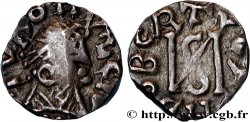
cgbfr.com numismatists


