


Live auction - fme_1065238 - III REPUBLIC Médaille, Visite des souverains russes en France

You must signin and be an approved bidder to bid, LOGIN TO BID. Accounts are subject to approval and the approval process takes place within 48 hours. Do not wait until the day a sale closes to register. Clicking on "BID" constitutes acceptance of the terms of use of cgb.fr private live auctions.
Bids must be placed in whole Euro amounts only. The sale will start closing at the time stated on the item description; any bids received at the site after the closing time will not be executed. Transmission times may vary and bids could be rejected if you wait until the last second. For further information check the Live auction FAQ
All winning bids are subject to a 18% buyer’s fee.
All winning bids are subject to a 18% buyer’s fee.
| Estimate : | 400 € |
| Price : | 420 € |
| Maximum bid : | 420 € |
| End of the sale : | 02 December 2025 18:11:55 |
| bidders : | 6 bidders |
Type : Médaille, Visite des souverains russes en France
Date: 1896
Metal : silver plated bronze
Diameter : 70 mm
Orientation dies : 12 h.
Engraver CHAPLAIN Jules-Clément (1839-1909)
Weight : 163,31 g.
Edge : lisse + corne BRONZE
Puncheon : corne BRONZE
Rarity : R2
Coments on the condition:
Belle patine grise hétérogène, légèrement irisée, présentant de l’usure sur certains hauts reliefs. Présence de quelques coups à l’avers sur les visages. Présence de quelques petits coups sur la tranche
Catalogue references :
Obverse
Obverse legend : NICOLAS. II - ALEXANDRA..
Obverse description : Bustes accolés de l’empereur Nicolas II et de l’impératrice Alexandra, de profil à droite. Signé : J. C. CHAPLAIN.
Reverse
Reverse legend : VISITE. EN. FRANCE / DE. LEURS. MAJESTÉS / L'EMPEREUR. ET. L'IMPÉRATRICE / DE RUSSIE / CHERBOURG. PARIS. CHALONS / 5-9 OCTOBRE / 1896.
Reverse description : Légende en sept lignes au-dessus d’une gerbe de fleurs formant une guirlande ; au-dessus, les armes de Russie et de la République française.
Commentary
La médaille est conservée dans son écrin en cuir marron gaufré de motifs dorés présentant les armes de France et de Russie. L’intérieur est en feutrine et soie bordeaux.
En 1896, le jeune empereur Nicolas II et son épouse l'impératrice Alexandra firent un voyage officiel en France qui eut un grand retentissement dans tout le pays. La Russie était la seule alliée de la France dont toute l'Europe se méfiait. À cette occasion Nicolas II posa la première pierre du pont Alexandre III, nommé en l'honneur de son père et pour symboliser l'amitié franco-russe. Le pont sera inauguré quatre ans plus tard par le président Émile Loubet, pour l'Exposition universelle de Paris de 1900.
The medal is kept in its brown leather case embossed with gold motifs featuring the arms of France and Russia. The interior is made of burgundy felt and silk. In 1896, the young Emperor Nicholas II and his wife, Empress Alexandra, made an official trip to France that caused a great stir throughout the country. Russia was the only ally of France that all of Europe distrusted. On this occasion, Nicholas II laid the foundation stone of the Alexander III Bridge, named in honor of his father and to symbolize Franco-Russian friendship. The bridge would be inaugurated four years later by President Émile Loubet, for the 1900 Paris World's Fair.
En 1896, le jeune empereur Nicolas II et son épouse l'impératrice Alexandra firent un voyage officiel en France qui eut un grand retentissement dans tout le pays. La Russie était la seule alliée de la France dont toute l'Europe se méfiait. À cette occasion Nicolas II posa la première pierre du pont Alexandre III, nommé en l'honneur de son père et pour symboliser l'amitié franco-russe. Le pont sera inauguré quatre ans plus tard par le président Émile Loubet, pour l'Exposition universelle de Paris de 1900.
The medal is kept in its brown leather case embossed with gold motifs featuring the arms of France and Russia. The interior is made of burgundy felt and silk. In 1896, the young Emperor Nicholas II and his wife, Empress Alexandra, made an official trip to France that caused a great stir throughout the country. Russia was the only ally of France that all of Europe distrusted. On this occasion, Nicholas II laid the foundation stone of the Alexander III Bridge, named in honor of his father and to symbolize Franco-Russian friendship. The bridge would be inaugurated four years later by President Émile Loubet, for the 1900 Paris World's Fair.
Historical background
III REPUBLIC
(4/09/1870-10/07/1940)
The news of the capitulation of Sedan provokes the revolution of September 4, 1870 in Paris. Proclaimed at the Hôtel de Ville, the Republic is endowed with a provisional government called the Government of National Defense. Threatened on the left by the insurrection of the Commune and on the right by the monarchists, the new regime had a difficult start.. Initially head of the executive power (February 1871), Thiers was responsible for reorganizing the country before choosing its form of government.. He became President of the Republic in August 1871 and, despite his action to liberate the territory, had to leave his post in March 1873 in the face of royalist opposition.. He is then replaced by Mac-Mahon favorable to the restoration of the monarchy but this one is not restored following the question of the flag. The law of the septennat was then put in place in November 1873 and then, in 1875, the fundamental laws were passed which served as the Constitution of the Third Republic.. Parliamentary system, it is characterized in particular by the clear preponderance of the legislative power on the executive power. Anticlerical, the Third Republic makes school free, secular and compulsory but continues the colonial policy for its economic, strategic and moral ambitions. Separation of Church and State was passed in 1905.. The idea of revenge on Germany and significant nationalism are at the heart of the Boulangist crisis, the Panama scandal or the Dreyfus affair of the years 1886-1899, while foreign policy is very active, particularly in Morocco and that the arms race develops. The First World War was expensive for France, which only recovered from 1920 or even 1928 for the coin with the "Poincaré" franc.. The crisis of 1929 is felt only from 1932 but lasts until 1939, a period during which ministerial instability is very important. Wavering in 1934, the Third Republic found a new unitary cement with anti-fascism which enabled the Popular Front to come to power in 1936.. But, paralyzed against Germany, France was then bogged down in a "phony war" and then suffered one of the greatest defeats in its history in June 1940.. Gathered in the National Assembly in Vichy on July 10, 1940, the Chambers, although elected in 1936, voted full powers to Pétain in a sort of collective suicide by 569 votes for, 80 votes against and 18 abstentions..
 Report a mistake
 Print the page
 Share my selection
 Ask a question
 Consign / sell
Related articles
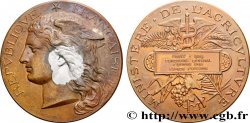
 Full data


Your Recently Viewed Items
PORTUGAL 250 Escudos J.O de Séoul, coureurs 1988 MS
6.00 €
cgbfr.com numismatists


