


fme_1141342 - III REPUBLIC - INDOCHINA Médaille uniface, Sergent Jules Bobillot

160.00 €(Approx. 182.40$ | 137.60£)
Quantity
Add to your cart

Type : Médaille uniface, Sergent Jules Bobillot
Date: n.d.
Metal : bronze
Diameter : 97,5 mm
Orientation dies : 12 h.
Weight : 106,15 g.
Edge : lisse
Puncheon : sans poinçon
Coments on the condition:
Patine marron hétérogène avec de l’usure sur les reliefs. Présence de coups et rayures
Obverse
Obverse legend : SERGENT BOBILLOT // -1860- - -1885- // TUYEN-QUAN..
Obverse description : Buste habillé et coiffé d’un casque de face, le visage tourné à gauche.
Reverse
Reverse legend : LISSE.
Commentary
Diamètre sans bélière : 86 mm.
Jules Bobillot (né à Paris en 1860, décédé à Hanoï le 18 mars 1885), d'abord journaliste, engagé à 20 ans au 4e régiment du génie. Sergent durant la guerre franco-chinoise, il se distingue par son courage lors du siège de Tuyen Quang où il est grièvement blessé. Décédé un mois plus tard à l'hôpital d'Hanoï, il devient rapidement un héros colonial, symbole du patriotisme promu par la Troisième République (cf. wikipedia).
Diameter without bail: 86 mm. Jules Bobillot (born in Paris in 1860, died in Hanoi on March 18, 1885), initially a journalist, enlisted at the age of 20 in the 4th Engineer Regiment. A sergeant during the Sino-French War, he distinguished himself by his courage during the siege of Tuyen Quang, where he was seriously wounded. He died a month later in a Hanoi hospital and quickly became a colonial hero, a symbol of the patriotism promoted by the Third Republic (see Wikipedia).
Jules Bobillot (né à Paris en 1860, décédé à Hanoï le 18 mars 1885), d'abord journaliste, engagé à 20 ans au 4e régiment du génie. Sergent durant la guerre franco-chinoise, il se distingue par son courage lors du siège de Tuyen Quang où il est grièvement blessé. Décédé un mois plus tard à l'hôpital d'Hanoï, il devient rapidement un héros colonial, symbole du patriotisme promu par la Troisième République (cf. wikipedia).
Diameter without bail: 86 mm. Jules Bobillot (born in Paris in 1860, died in Hanoi on March 18, 1885), initially a journalist, enlisted at the age of 20 in the 4th Engineer Regiment. A sergeant during the Sino-French War, he distinguished himself by his courage during the siege of Tuyen Quang, where he was seriously wounded. He died a month later in a Hanoi hospital and quickly became a colonial hero, a symbol of the patriotism promoted by the Third Republic (see Wikipedia).
Historical background
III REPUBLIC - INDOCHINA
(4/09/1870-10/07/1940)
Paul Doumer (1857-1932) was appointed governor of Indochina in 1897. He undertook major works and created, in 1898, the French School in the Far East. He reorganized the following year the opium trade, which represented a third of the colony's income. Doumer remains in place until 1911. He is then replaced by Albert Sarraut.
 Report a mistake
 Print the page
 Share my selection
 Ask a question
 Consign / sell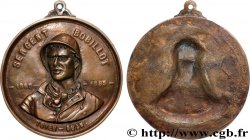
 Full data
Your Recently Viewed Items

LOUIS XIII Double tournois, buste adolescent, type 1 1617 Saint-André de Villen
12.00 €

LOUIS XIV "THE SUN KING" Écu aux palmes 1694 Lille VF
106.00 €
cgbfr.com numismatists


