


E-auction 159-96783 - bpv_154332 - TRAJAN DECIUS Tétradrachme syro-phénicien
You must signin and be an approved bidder to bid, LOGIN TO BID. Accounts are subject to approval and the approval process takes place within 48 hours. Do not wait until the day a sale closes to register. Clicking on « bid » constitutes acceptance of the terms of use of cgb.fr private e-auctions.
Bids must be placed in whole Euro amounts only. The sale will start closing at the time stated on the item description; any bids received at the site after the closing time will not be executed. Transmission times may vary and bids could be rejected if you wait until the last second. For further information ckeck the E-auctions F.A.Q.
NO BUYER'S FEE.
NO BUYER'S FEE.
| Estimate : | 140 € |
| Price : | 31 € |
| Maximum bid : | 32 € |
| End of the sale : | 02 May 2016 15:18:30 |
| bidders : | 6 bidders |
Type : Tétradrachme syro-phénicien
Date: 249
Mint name / Town : Antioche, Syrie, Séleucie et Piérie
Metal : billon
Diameter : 28 mm
Orientation dies : 6 h.
Weight : 10,40 g.
Rarity : R1
Coments on the condition:
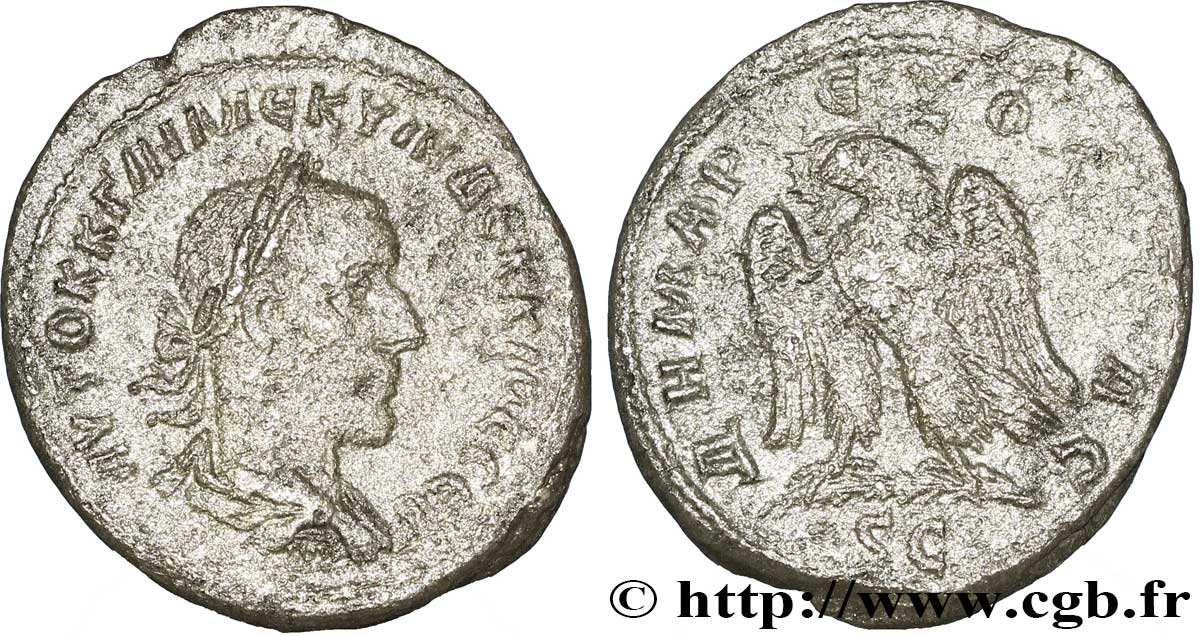
Pas de trace de circulation, il y a même des restes de surface d’origine mais toute la surface est piquée
Catalogue references :
Predigree :
Cet exemplaire est le 0500_014 de la base TSP
Obverse
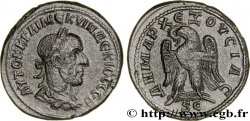
Obverse description : Buste lauré, drapé et cuirassé de Trajan Dèce à droite, vu de trois quarts en arrière (A*2).
Obverse legend : AUTOK K GAI ME KUIN DEKKIOS SEB
Obverse translation : (L’empereur césar Caius Messius Quintus Dèce auguste).
Reverse
Reverse legend : S C À L’EXERGUE.
Reverse description : Aigle debout à gauche sur une palme, les ailes déployées, tête à gauche et queue à droite, tenant une couronne feuillée dans son bec.
Reverse legend : DHMARC EX OUSIAS
Reverse translation : (Revêtu de la puissance tribunitienne / avec l’accord du Sénat d’Antioche).
Commentary
Les premières émissions de Trajan Dèce se définissent par la légende sans le nom de Trajan ; nous savons que prendre ce surnom fut l’un des premiers actes officiels de Dèce, une fois celui-ci arrivé à Rome, et il faut en déduire que tout ce qui fut frappé sans la mention Trajan est antérieur à cette décision.
Compte tenu de l’importance relative des frappes, on peut penser qu’Antioche, en tous cas les autorités provinciales, firent immédiatement allégeance au nouvel empereur dès sa proclamation et le décès des deux Philippe.
On remarque à ce propos la disparition immédiate de l’exergue ANTIOXIA et le retour à la palme, l’usage avant le troisième consulat de Philippe. Faut-il en déduire que le financement des émissions changea et retourna aux autorités provinciales alors qu’elles auraient été assumées par la ville durant les 3e et 4e consulats de Philippe ? Il faut se rappeler que le frère de Philippe, Priscus, installé à Antioche pendant tout le règne avec tous les pouvoirs (y compris le titre de Rector Orientis !) avait peut-être obligé la ville à financer les émissions monétaires ; la source de son pouvoir disparue (on ignore sa fin) on peut imaginer que la ville se débarrassa du fardeau qui revint donc aux nouvelles autorités provinciales, trop heureuses de manifester leur allégeance au nouveau pouvoir par des émissions monétaires à son effigie.
La structure de cette première émission témoigne aussi d’une confusion certaine. La presque totalité des types sont extrêmement rares, on découvre une cinquième officine, qui n’est pas connue sous Philippe, mais on ne connaît aucune pièce pour les 2e et 3e officine, un aigle à gauche avec tête et queue à droite fait son apparition, On trouve même une variante d’orthographe (un seul K à Dekkioc) qui deviendra ensuite la norme.
À propos des officines, il faut noter que la plupart des frappes ne portent pas de point d’officine, ce qui renforce l’hypothèse d’une série pour Philippe sans points d’officine restant à identifier.
Il est certain que le temps fera apparaître de nouveaux types qui viendront compléter cette série particulièrement difficile.
On note que les sigma sont gravés en C.
Dans la base TSP maintenue par Michel Prieur, vingt-neuf exemplaires sont maintenant répertoriés pour ce type, plusieurs en musées : deux à Jérusalem, un à Paris (Fonds Général 828), à Yale (Trouvaille de Doura I, 385), au Hunterian (n° 322), à l’ANS et à Berne (ex collection Righetti).
The first issues of Trajan Decius are defined by the legend without the name of Trajan; we know that taking this nickname was one of the first official acts of Decius, once he arrived in Rome, and we must deduce that everything that was struck without the mention Trajan is prior to this decision.
Given the relative importance of the strikes, we can assume that Antioch, or at least the provincial authorities, immediately pledged allegiance to the new emperor upon his proclamation and the death of the two Philips..
In this regard, we note the immediate disappearance of the exergue ANTIOXIA and the return to the palm, the use before the third consulate of Philip. Should we deduce from this that the financing of the issues changed and returned to the provincial authorities when they would have been assumed by the city during the 3rd and 4th consulates of Philip? It must be remembered that Philip's brother, Priscus, installed in Antioch throughout the reign with all the powers (including the title of Rector Orientis!) had perhaps forced the city to finance the monetary issues; the source of his power having disappeared (we do not know how it ended) we can imagine that the city got rid of the burden which therefore fell to the new provincial authorities, only too happy to show their allegiance to the new power by issuing monetary issues bearing his image.
The structure of this first issue also shows a certain confusion.. Almost all the types are extremely rare, we discover a fifth office, which is not known under Philip, but we do not know any piece for the 2nd and 3rd office, an eagle on the left with head and tail on the right makes its appearance, We even find a spelling variant (a single K in Dekkioc) which will then become the standard.
Regarding the pharmacies, it should be noted that most of the strikes do not bear a pharmacy point, which reinforces the hypothesis of a series for Philippe without pharmacy points remaining to be identified..
It is certain that time will bring out new types that will complete this particularly difficult series..
Note that the sigmas are engraved in C.
In the TSP database maintained by Michel Prieur, twenty-nine examples are now listed for this type, several in museums: two in Jerusalem, one in Paris (Fonds Général 828), at Yale (Trouvaille de Doura I, 385), at the Hunterian (no. 322), at the ANS and in Bern (ex Righetti collection)
Compte tenu de l’importance relative des frappes, on peut penser qu’Antioche, en tous cas les autorités provinciales, firent immédiatement allégeance au nouvel empereur dès sa proclamation et le décès des deux Philippe.
On remarque à ce propos la disparition immédiate de l’exergue ANTIOXIA et le retour à la palme, l’usage avant le troisième consulat de Philippe. Faut-il en déduire que le financement des émissions changea et retourna aux autorités provinciales alors qu’elles auraient été assumées par la ville durant les 3e et 4e consulats de Philippe ? Il faut se rappeler que le frère de Philippe, Priscus, installé à Antioche pendant tout le règne avec tous les pouvoirs (y compris le titre de Rector Orientis !) avait peut-être obligé la ville à financer les émissions monétaires ; la source de son pouvoir disparue (on ignore sa fin) on peut imaginer que la ville se débarrassa du fardeau qui revint donc aux nouvelles autorités provinciales, trop heureuses de manifester leur allégeance au nouveau pouvoir par des émissions monétaires à son effigie.
La structure de cette première émission témoigne aussi d’une confusion certaine. La presque totalité des types sont extrêmement rares, on découvre une cinquième officine, qui n’est pas connue sous Philippe, mais on ne connaît aucune pièce pour les 2e et 3e officine, un aigle à gauche avec tête et queue à droite fait son apparition, On trouve même une variante d’orthographe (un seul K à Dekkioc) qui deviendra ensuite la norme.
À propos des officines, il faut noter que la plupart des frappes ne portent pas de point d’officine, ce qui renforce l’hypothèse d’une série pour Philippe sans points d’officine restant à identifier.
Il est certain que le temps fera apparaître de nouveaux types qui viendront compléter cette série particulièrement difficile.
On note que les sigma sont gravés en C.
Dans la base TSP maintenue par Michel Prieur, vingt-neuf exemplaires sont maintenant répertoriés pour ce type, plusieurs en musées : deux à Jérusalem, un à Paris (Fonds Général 828), à Yale (Trouvaille de Doura I, 385), au Hunterian (n° 322), à l’ANS et à Berne (ex collection Righetti).
The first issues of Trajan Decius are defined by the legend without the name of Trajan; we know that taking this nickname was one of the first official acts of Decius, once he arrived in Rome, and we must deduce that everything that was struck without the mention Trajan is prior to this decision.
Given the relative importance of the strikes, we can assume that Antioch, or at least the provincial authorities, immediately pledged allegiance to the new emperor upon his proclamation and the death of the two Philips..
In this regard, we note the immediate disappearance of the exergue ANTIOXIA and the return to the palm, the use before the third consulate of Philip. Should we deduce from this that the financing of the issues changed and returned to the provincial authorities when they would have been assumed by the city during the 3rd and 4th consulates of Philip? It must be remembered that Philip's brother, Priscus, installed in Antioch throughout the reign with all the powers (including the title of Rector Orientis!) had perhaps forced the city to finance the monetary issues; the source of his power having disappeared (we do not know how it ended) we can imagine that the city got rid of the burden which therefore fell to the new provincial authorities, only too happy to show their allegiance to the new power by issuing monetary issues bearing his image.
The structure of this first issue also shows a certain confusion.. Almost all the types are extremely rare, we discover a fifth office, which is not known under Philip, but we do not know any piece for the 2nd and 3rd office, an eagle on the left with head and tail on the right makes its appearance, We even find a spelling variant (a single K in Dekkioc) which will then become the standard.
Regarding the pharmacies, it should be noted that most of the strikes do not bear a pharmacy point, which reinforces the hypothesis of a series for Philippe without pharmacy points remaining to be identified..
It is certain that time will bring out new types that will complete this particularly difficult series..
Note that the sigmas are engraved in C.
In the TSP database maintained by Michel Prieur, twenty-nine examples are now listed for this type, several in museums: two in Jerusalem, one in Paris (Fonds Général 828), at Yale (Trouvaille de Doura I, 385), at the Hunterian (no. 322), at the ANS and in Bern (ex Righetti collection)
Historical background
TRAJAN DECIUS
(07/249-06/251)
Decius was born in 201 in Lower Pannonia. After a brilliant career which opened the doors of the Senate to him, he was governor of Lower Moesia under the reign of Alexander Severus. At the end of the reign of Philip, winner on the Danube of barbarian hordes, he was proclaimed august despite his refusal. He writes it to Philippe who does not believe him and marches against him. Philip and his son are killed in battle near Verona. Decius joins to his name that, prestigious, of Trajan. After a stint in Rome, Decius travels to the Danubian Limes. Deserted, the limes allowed the Goths to filter through, ravaging the Danubian provinces, where the Emperor originated. He fails to stem the invasion. From 250, a new plague ravages the Empire. The plague decimated population and herds and further weakened the limes. He began a persecution against Christians in 250 (Polyeucte, Corneille). The following year, he went to the limes, defeated the Goths, but his son was killed. He himself finds death while wanting to avenge him. He is the first emperor to fall in battle against the Barbarians.
 Report a mistake
 Print the page
 Share my selection
 Ask a question
 Consign / sell
Related articles
 Full data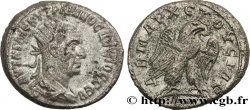



Your Recently Viewed Items
Essai de 5 centimes Daniel-Dupuis 1898 F.119/4 MS
735.00 €
cgbfr.com numismatists


