


Live auction - fme_995442 - SECOND EMPIRE Médaille, Conseil des Prud’Hommes

You must signin and be an approved bidder to bid, LOGIN TO BID. Accounts are subject to approval and the approval process takes place within 48 hours. Do not wait until the day a sale closes to register. Clicking on "BID" constitutes acceptance of the terms of use of cgb.fr private live auctions.
Bids must be placed in whole Euro amounts only. The sale will start closing at the time stated on the item description; any bids received at the site after the closing time will not be executed. Transmission times may vary and bids could be rejected if you wait until the last second. For further information check the Live auction FAQ
All winning bids are subject to a 18% buyer’s fee.
All winning bids are subject to a 18% buyer’s fee.
| Estimate : | 120 € |
| Price : | 136 € |
| Maximum bid : | 136 € |
| End of the sale : | 24 June 2025 14:28:06 |
| bidders : | 4 bidders |
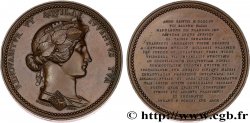
Type : Médaille, Conseil des Prud’Hommes
Date: 1859
Mint name / Town : 75 - Paris
Metal : silver
Diameter : 51 mm
Orientation dies : 12 h.
Engraver BORREL Alfred (1836-1927)
Weight : 63,43 g.
Edge : lisse + main ARGENT
Puncheon : main indicatrice (1845-1860) et ARGENT
Coments on the condition:
Médaille ayant été nettoyée. Traces d’oxydation notamment au revers, rayure profonde sur la tranche
Obverse
Obverse legend : NAPOLEON III EMPEREUR .
Obverse description : Buste de Napoléon III à gauche. Signé : BOREL 1855.
Reverse
Reverse legend : CONSEIL DES PRUD’HOMMES DE PARIS - *POUR L’INDUSTRIE DES TISSUS* // MR / STOPIN / ( AIMABLE ANSELME PAUL) / ELU EN 1859 / À L’EXERGUE : 9 JUIN 1847.
Reverse description : Légende circulaire et en six lignes gravées au dessus de machines à tisser. Signé : BORREL.
Commentary
Médaille décernée à monsieur Amable Anselme Paul Stopin, élu en 1859, qui sera nommé vice-président par décret impérial le 13 juin 1868.
En France, le conseil de prud'hommes est une juridiction de premier degré des litiges nés à l'occasion de l'exécution ou de la rupture du contrat de travail entre employeurs et salariés de droit privé, comme le licenciement et la rupture conventionnelle. Les personnels de services publics exerçant dans les conditions de droit privé dépendent également du conseil de prud'hommes.
C'est le 18 mars 1806 qu'une loi créant un conseil de prud'hommes à Lyon est promulguée par Napoléon Ier puis complétée par un décret du 3 juillet 1806 : les employeurs y sont majoritaires. Des tribunaux favorisant la conciliation entre les fabricants de soie et les ouvriers lyonnais (canuts) existaient déjà et servirent d'exemple. À Paris, un conseil de prud'hommes pour les industries métallurgiques est créé en 1845, puis en 1847 des conseils de prud'hommes pour les tissus, pour les produits chimiques et pour les industries diverses.
Medal awarded to Mr. Amable Anselme Paul Stopin, elected in 1859, who was appointed vice-president by imperial decree on June 13, 1868. In France, the industrial tribunal is a court of first instance for disputes arising from the execution or termination of employment contracts between employers and employees under private law, such as dismissal and termination by mutual agreement. Public service personnel working under private law also depend on the industrial tribunal. On March 18, 1806, a law creating an industrial tribunal in Lyon was promulgated by Napoleon I and then supplemented by a decree of July 3, 1806: employers were in the majority. Courts promoting conciliation between silk manufacturers and Lyon workers (canuts) already existed and served as an example. In Paris, a labor tribunal for the metallurgical industries was created in 1845, then in 1847 labor tribunals for fabrics, for chemical products and for various industries.
En France, le conseil de prud'hommes est une juridiction de premier degré des litiges nés à l'occasion de l'exécution ou de la rupture du contrat de travail entre employeurs et salariés de droit privé, comme le licenciement et la rupture conventionnelle. Les personnels de services publics exerçant dans les conditions de droit privé dépendent également du conseil de prud'hommes.
C'est le 18 mars 1806 qu'une loi créant un conseil de prud'hommes à Lyon est promulguée par Napoléon Ier puis complétée par un décret du 3 juillet 1806 : les employeurs y sont majoritaires. Des tribunaux favorisant la conciliation entre les fabricants de soie et les ouvriers lyonnais (canuts) existaient déjà et servirent d'exemple. À Paris, un conseil de prud'hommes pour les industries métallurgiques est créé en 1845, puis en 1847 des conseils de prud'hommes pour les tissus, pour les produits chimiques et pour les industries diverses.
Medal awarded to Mr. Amable Anselme Paul Stopin, elected in 1859, who was appointed vice-president by imperial decree on June 13, 1868. In France, the industrial tribunal is a court of first instance for disputes arising from the execution or termination of employment contracts between employers and employees under private law, such as dismissal and termination by mutual agreement. Public service personnel working under private law also depend on the industrial tribunal. On March 18, 1806, a law creating an industrial tribunal in Lyon was promulgated by Napoleon I and then supplemented by a decree of July 3, 1806: employers were in the majority. Courts promoting conciliation between silk manufacturers and Lyon workers (canuts) already existed and served as an example. In Paris, a labor tribunal for the metallurgical industries was created in 1845, then in 1847 labor tribunals for fabrics, for chemical products and for various industries.
Historical background
SECOND EMPIRE
(02/12/1852-04/09/1870)
Proclaimed Emperor under the name of Napoleon III, Louis Napoleon made his solemn entry into Paris on December 2, 1852.. He married Eugénie Marie de Montijo, a Spanish aristocrat, in January 1853. His reign can be divided into three periods: the authoritarian Empire until 1860; the Liberal Empire from 1860 to 1870 then the Parliamentary Empire in 1870. During the authoritarian Empire, Napoleon III exercised his power without sharing, controlled the press while the newspapers practiced self-censorship to avoid their suppression.. The prefects exercise unlimited power in the departments, the mayors, the civil servants are appointed by the government. As under the First Empire, Education and the University are monitored. Maintaining the main principles of the revolution, the sovereignty of the people is continued thanks to the consultation by plebiscite. On the economic level, the boom is important, industrialization develops as well as credit organizations and department stores. Military prestige is increased by the Crimean War which allows France to play an international role. The attack of Orsini (January 1858) does not prevent France from intervening in Italy to make triumph the principle of nationalities and allows the attachment of Nice and Savoy by the treaty of Turin (March 1860). From 1860, the Empire moved towards more freedoms: free trade treaty with England, appearance of a weak opposition in the Legislative Body, granting of the right to strike (1864), liberalization of the press (1868). On the international level, France acquires New Caledonia, Cochinchina and encourages the digging of the Suez Canal by Ferdinand de Lesseps. In Mexico, however, support for Maximilian and Austria was a failure. The 1869 elections were very bad for the regime and the opposition obtained 45% of the votes. The regime then evolved towards a parliamentary Empire by calling Émile Ollivier, leader of the Orléanist and liberal party, to power. After Sadowa in 1866 when Prussia crushed Austria, the affair of the throne of Spain and the dispatch from Ems led to the war which was declared on July 19, 1870. Accumulating setbacks, the French army was surrounded in Metz then Napoleon III, ill, capitulated at Sedan on September 2. As soon as the news was known, the decline of the Empire was announced by Gambetta, then the Republic was proclaimed on September 4.. Napoleon III was then taken captive to Hesse and then left for Kent where he died in 1873..
 Report a mistake
 Print the page
 Share my selection
 Ask a question
 Consign / sell
Related articles
 Full data


Your Recently Viewed Items
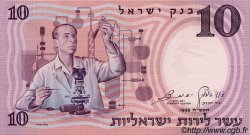
10 Lirot ISRAEL 1958 P.32a XF+
6.10 €
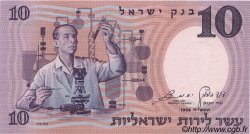
10 Lirot ISRAEL 1958 P.32d UNC
8.00 €

50 Centimes TUNISIA 1943 P.54 VF
21.00 €
GALERIUS Follis ou nummus AU
18.00 €
CONSTANTINE I THE GREAT Centenionalis ou nummus AU
29.00 €

SECOND EMPIRE Médaille, Conseil des Prud’Hommes AU
136.00 €
cgbfr.com numismatists


