


E-auction 164-100527 - bpv_153805 - PHILIPPUS II Tétradrachme syro-phénicien
You must signin and be an approved bidder to bid, LOGIN TO BID. Accounts are subject to approval and the approval process takes place within 48 hours. Do not wait until the day a sale closes to register. Clicking on « bid » constitutes acceptance of the terms of use of cgb.fr private e-auctions.
Bids must be placed in whole Euro amounts only. The sale will start closing at the time stated on the item description; any bids received at the site after the closing time will not be executed. Transmission times may vary and bids could be rejected if you wait until the last second. For further information ckeck the E-auctions F.A.Q.
NO BUYER'S FEE.
NO BUYER'S FEE.
| Estimate : | 130 € |
| Price : | 42 € |
| Maximum bid : | 44 € |
| End of the sale : | 06 June 2016 15:15:00 |
| bidders : | 9 bidders |
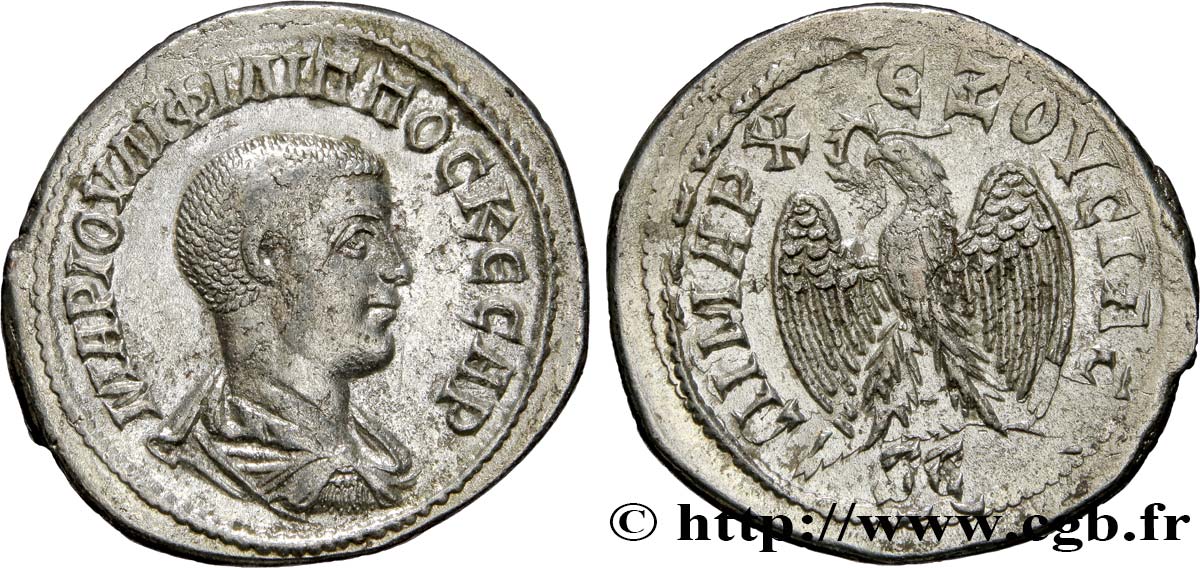
Type : Tétradrachme syro-phénicien
Date: 244
Mint name / Town : Antioche, Syrie, Séleucie et Piérie
Metal : billon
Diameter : 28,00 mm
Orientation dies : 12 h.
Weight : 9,82 g.
Coments on the condition:
Frappe bien centrée mais important tréflage au revers et quelques petites taches
Catalogue references :
Predigree :
Cet exemplaire, qui provient de la trouvaille dite de Lauren, est le 0332A_013 de la base TSP
Obverse
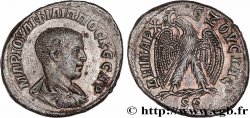
Obverse description : Buste tête nue drapé et cuirassé à droite, ptéryges visibles, vu de trois quarts arrière.
Obverse legend : MAR IOULI FILIPPOS KESAR
Obverse translation : (Marcus Julius Philippus césar).
Reverse
Reverse legend : S|C À L’EXERGUE.
Reverse description : Aigle debout à gauche, les ailes déployées, tête à gauche et queue à droite, tenant une couronne feuillée dans son bec, posé sur une palme tige à droite.
Reverse legend : DHMARC - EX OUSIAS, (Dhmarcikhs Ex Ousias)
Reverse translation : (Revêtu de la puissance tribunitienne / avec l’accord du Sénat).
Commentary
Suite aux commentaires pertinents de Richard McAlee à propos de son numéro 1008 concernant l'existence de bustes drapés et cuirassés mais aussi de bustes drapés seuls, nous avons divisé le type 332 en deux parties.
Le 332 concerne, suivant une logique chronologique, les bustes drapés seuls qui se définissent par l'épaule qui est ronde et sans ptéryges.
Le 332A suit et concerne les bustes drapés et cuirassés dont l'épaule porte des ptéryges.
Les exemplaires où l'épaule n'est pas visible doivent être classés par comparaison de coins.
Les frappes de Philippe II, comme celles d’Otacilie Sévère d’ailleurs, portent les titres de Philippe. Elles se distinguent entre elles par deux légendes, différents aigles de revers et un portrait à droite ou à gauche.
Après les frappes de l’atelier de Rome au MONVRB, les émissions de Philippe sont réorganisées à Antioche, le SC conservé et l’aigle est posé sur une palme. Le point essentiel est qu’elle sera présente jusqu’aux frappes du troisième consulat (il n’y a pas de frappes du deuxième consulat) puis reviendra pour toutes les émissions de Trajan Dèce avant de disparaître définitivement avec les frappes de Trébonien Galle et la fin des émissions de tétradrachmes.
La palme est un attribut monétaire récurrent à Antioche, soit dans le champ, soit sous les pattes de l’aigle du revers. A-t-elle toujours la même signification ? Impossible de le savoir. Théoriquement, la palme est le corollaire d’une onction, d’une fête, une décoration religieuse largement utilisée (voir la scène de l’arrivée du Christ à Jérusalem), et probablement, comme l’aigle, un symbole religieux œcuménique, destiné à être compris et accepté par tous les habitants de la région.
Le retour du SC, disparu des revers entre 242 et 244, après avoir remplacé à Antioche le Delta Eta apparu en 215, et jamais vu dans un autre atelier officiel, est confirmé. Si nous suivons la logique développée pour ces émissions, il faut croire que ces frappes de Philippe ont reçu l’assentiment (au moins) et le financement (au plus) du sénat d’Antioche. Une gigantesque rançon ayant été payée aux Perses pour abréger la guerre, le propre frère de Philippe étant gouverneur de Syrie, sa propre famille en étant originaire, on peut au moins penser que le Sénat regagna de son importance de l’époque des Sévères. La réputation de Priscus étant de pressurer la population - au point de susciter l’usurpateur Jotapian - on peut aussi penser que le produit de ces spoliations servit à frapper des tétradrachmes au portrait et donc à la gloire de l’Empereur.
On note que les sigma sont gravés en C.
Dans la base TSP maintenue par Michel Prieur, trente-deux exemplaires sont maintenant répertoriés pour ce type 332A donc avec ptéryges dont en musées British Museum, Yale ex Doura et Berlin (2).
Following Richard McAlee's insightful comments on his issue 1008 regarding the existence of draped and cuirassed busts as well as draped busts alone, we have divided type 332 into two parts..
332 concerns, following a chronological logic, the draped busts alone which are defined by the shoulder which is round and without pteryges.
332A follows and concerns draped and armoured busts whose shoulders bear pteryges.
Specimens where the shoulder is not visible should be graded by die comparison.
The coins of Philip II, like those of Otacilia Severus, bear the titles of Philip. They are distinguished from each other by two legends, different reverse eagles and a portrait on the right or left..
After the strikes of the Rome workshop at MONVRB, the issues of Philip were reorganized in Antioch, the SC preserved and the eagle placed on a palm branch. The essential point is that it will be present until the strikes of the third consulate (there are no strikes of the second consulate) then will return for all the issues of Trajan Decius before disappearing definitively with the strikes of Trebonianus Gallus and the end of the issues of tetradrachms.
The palm is a recurring monetary attribute in Antioch, either in the field or under the paws of the eagle on the reverse. Does it still have the same meaning? It's impossible to know.. Theoretically, the palm is the corollary of an anointing, a feast, a widely used religious decoration (see the scene of Christ's arrival in Jerusalem), and probably, like the eagle, an ecumenical religious symbol, intended to be understood and accepted by all the inhabitants of the region..
The return of the SC, which disappeared from the reverses between 242 and 244, after having replaced in Antioch the Delta Eta which appeared in 215, and never seen in another official workshop, is confirmed. If we follow the logic developed for these emissions, we must believe that these strikes of Philip received the assent (at least) and the financing (at most) of the senate of Antioch. A gigantic ransom having been paid to the Persians to shorten the war, Philip's own brother being governor of Syria, his own family being from there, one can at least think that the Senate regained its importance of the time of the Severans. Priscus's reputation for squeezing the population - to the point of giving rise to the usurper Jotapian - we can also think that the product of these spoliations was used to strike tetradrachms with the portrait and therefore to the glory of the Emperor..
Note that the sigmas are engraved in C.
In the TSP database maintained by Michel Prieur, thirty-two examples are now listed for this type 332A, therefore with pteryges, including in the British Museum, Yale ex Doura and Berlin (2)
Le 332 concerne, suivant une logique chronologique, les bustes drapés seuls qui se définissent par l'épaule qui est ronde et sans ptéryges.
Le 332A suit et concerne les bustes drapés et cuirassés dont l'épaule porte des ptéryges.
Les exemplaires où l'épaule n'est pas visible doivent être classés par comparaison de coins.
Les frappes de Philippe II, comme celles d’Otacilie Sévère d’ailleurs, portent les titres de Philippe. Elles se distinguent entre elles par deux légendes, différents aigles de revers et un portrait à droite ou à gauche.
Après les frappes de l’atelier de Rome au MONVRB, les émissions de Philippe sont réorganisées à Antioche, le SC conservé et l’aigle est posé sur une palme. Le point essentiel est qu’elle sera présente jusqu’aux frappes du troisième consulat (il n’y a pas de frappes du deuxième consulat) puis reviendra pour toutes les émissions de Trajan Dèce avant de disparaître définitivement avec les frappes de Trébonien Galle et la fin des émissions de tétradrachmes.
La palme est un attribut monétaire récurrent à Antioche, soit dans le champ, soit sous les pattes de l’aigle du revers. A-t-elle toujours la même signification ? Impossible de le savoir. Théoriquement, la palme est le corollaire d’une onction, d’une fête, une décoration religieuse largement utilisée (voir la scène de l’arrivée du Christ à Jérusalem), et probablement, comme l’aigle, un symbole religieux œcuménique, destiné à être compris et accepté par tous les habitants de la région.
Le retour du SC, disparu des revers entre 242 et 244, après avoir remplacé à Antioche le Delta Eta apparu en 215, et jamais vu dans un autre atelier officiel, est confirmé. Si nous suivons la logique développée pour ces émissions, il faut croire que ces frappes de Philippe ont reçu l’assentiment (au moins) et le financement (au plus) du sénat d’Antioche. Une gigantesque rançon ayant été payée aux Perses pour abréger la guerre, le propre frère de Philippe étant gouverneur de Syrie, sa propre famille en étant originaire, on peut au moins penser que le Sénat regagna de son importance de l’époque des Sévères. La réputation de Priscus étant de pressurer la population - au point de susciter l’usurpateur Jotapian - on peut aussi penser que le produit de ces spoliations servit à frapper des tétradrachmes au portrait et donc à la gloire de l’Empereur.
On note que les sigma sont gravés en C.
Dans la base TSP maintenue par Michel Prieur, trente-deux exemplaires sont maintenant répertoriés pour ce type 332A donc avec ptéryges dont en musées British Museum, Yale ex Doura et Berlin (2).
Following Richard McAlee's insightful comments on his issue 1008 regarding the existence of draped and cuirassed busts as well as draped busts alone, we have divided type 332 into two parts..
332 concerns, following a chronological logic, the draped busts alone which are defined by the shoulder which is round and without pteryges.
332A follows and concerns draped and armoured busts whose shoulders bear pteryges.
Specimens where the shoulder is not visible should be graded by die comparison.
The coins of Philip II, like those of Otacilia Severus, bear the titles of Philip. They are distinguished from each other by two legends, different reverse eagles and a portrait on the right or left..
After the strikes of the Rome workshop at MONVRB, the issues of Philip were reorganized in Antioch, the SC preserved and the eagle placed on a palm branch. The essential point is that it will be present until the strikes of the third consulate (there are no strikes of the second consulate) then will return for all the issues of Trajan Decius before disappearing definitively with the strikes of Trebonianus Gallus and the end of the issues of tetradrachms.
The palm is a recurring monetary attribute in Antioch, either in the field or under the paws of the eagle on the reverse. Does it still have the same meaning? It's impossible to know.. Theoretically, the palm is the corollary of an anointing, a feast, a widely used religious decoration (see the scene of Christ's arrival in Jerusalem), and probably, like the eagle, an ecumenical religious symbol, intended to be understood and accepted by all the inhabitants of the region..
The return of the SC, which disappeared from the reverses between 242 and 244, after having replaced in Antioch the Delta Eta which appeared in 215, and never seen in another official workshop, is confirmed. If we follow the logic developed for these emissions, we must believe that these strikes of Philip received the assent (at least) and the financing (at most) of the senate of Antioch. A gigantic ransom having been paid to the Persians to shorten the war, Philip's own brother being governor of Syria, his own family being from there, one can at least think that the Senate regained its importance of the time of the Severans. Priscus's reputation for squeezing the population - to the point of giving rise to the usurper Jotapian - we can also think that the product of these spoliations was used to strike tetradrachms with the portrait and therefore to the glory of the Emperor..
Note that the sigmas are engraved in C.
In the TSP database maintained by Michel Prieur, thirty-two examples are now listed for this type 332A, therefore with pteryges, including in the British Museum, Yale ex Doura and Berlin (2)
Historical background
PHILIPPUS II
(05/244-09/249)
Caesar
Son of Philip the Arab and Otacilia Sévéra, Philip II was named Caesar shortly after his father's accession, who awarded him the title of prince of youth..
 Report a mistake
 Print the page
 Share my selection
 Ask a question
 Consign / sell
Related articles

 Full data

cgbfr.com numismatists


