


Live auction - bfe_946324 - NORMANDY - DUCHY OF NORMANDY - RICHARD I Denier

You must signin and be an approved bidder to bid, LOGIN TO BID. Accounts are subject to approval and the approval process takes place within 48 hours. Do not wait until the day a sale closes to register. Clicking on "BID" constitutes acceptance of the terms of use of cgb.fr private live auctions.
Bids must be placed in whole Euro amounts only. The sale will start closing at the time stated on the item description; any bids received at the site after the closing time will not be executed. Transmission times may vary and bids could be rejected if you wait until the last second. For further information check the Live auction FAQ
All winning bids are subject to a 18% buyer’s fee.
All winning bids are subject to a 18% buyer’s fee.
| Estimate : | 5 000 € |
| Price : | 3 000 € |
| Maximum bid : | 3 500 € |
| End of the sale : | 24 September 2024 17:31:43 |
| bidders : | 1 bidder |
Type : Denier
Date: c. 927-942
Date: n.d.
Mint name / Town : Rouen
Metal : silver
Diameter : 19,5 mm
Orientation dies : 3 h.
Weight : 0,96 g.
Rarity : R3
Coments on the condition:
Ce denier est frappé sur un flan irrégulier (manques de métal déjà absent au XIXe siècle) et présentant de hauts reliefs. Monnaie recouverte d’une patine grise
Catalogue references :
Predigree :
Denier provenant du trésor de Soleure (Suisse) découvert en 1860 et non revu depuis cette date. La gravure de cet exemplaire est illustré dans l’ouvrage de Dominique Legros, n° 145, p. 103
Avec son certificat d’exportation n°249268 délivré par le Ministère français de la Culture
Obverse
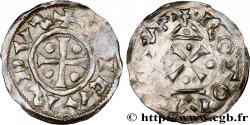
Obverse legend : + VVILELMVS.
Obverse description : Croix cantonnée de quatre besants.
Obverse translation : (Guillaume).
Reverse
Reverse legend : + ROTOMA CIV.
Reverse description : Croix évidée au centre et cantonnée de quatre croissants.
Reverse translation : (Rouen).
Commentary
De longs débats eurent lieu au XIXe siècle au sujet du prénom Guillaume figurant au droit. Guillaume Longue-Épée, Guillaume le Conquérant. Benjamin Fillon en 1856, Etudes numismatiques, p. 159 a proposé d’y voir Guillaume comte d’Hyèmes, fils cadet de Richard Ier qui entra en révolte en 997 contre Richard II. La présence d’un autre exemplaire découvert dans le trésor de Terslev (Danemark), enfoui vers 960, a permis à Blanchet et Dieudonné de reclassé ce denier à Guillaume Longue-Épée. Un autre denier similaire (celui-ci) était conservé dans le dépôt monétaire découvert à Soleure caché vers 956-965 confirmant l’attribution de Blanchet et Dieudonné. Dominique Legros attribue également cette monnaie à Guillaume Longue-Épée (927-942). Voir également et en dernier lieu l’étude de Jens Moesgaard, BSFN, 1999, p. 143.
Long debates took place in the 19th century about the first name William appearing on the obverse. William Longsword, William the Conqueror. Benjamin Fillon in 1856, Numismatic Studies, p. 159 proposed to see William Count of Hyèmes, younger son of Richard I who entered into revolt in 997 against Richard II. The presence of another example discovered in the treasure of Terslev (Denmark), buried around 960, allowed Blanchet and Dieudonné to reclassify this denarius to William Longsword. Another similar denarius (this one) was kept in the monetary deposit discovered in Solothurn hidden around 956-965, confirming the attribution of Blanchet and Dieudonné. Dominique Legros also attributes this coin to William Longsword (927-942). See also and lastly the study by Jens Moesgaard, BSFN, 1999, p. 143
Long debates took place in the 19th century about the first name William appearing on the obverse. William Longsword, William the Conqueror. Benjamin Fillon in 1856, Numismatic Studies, p. 159 proposed to see William Count of Hyèmes, younger son of Richard I who entered into revolt in 997 against Richard II. The presence of another example discovered in the treasure of Terslev (Denmark), buried around 960, allowed Blanchet and Dieudonné to reclassify this denarius to William Longsword. Another similar denarius (this one) was kept in the monetary deposit discovered in Solothurn hidden around 956-965, confirming the attribution of Blanchet and Dieudonné. Dominique Legros also attributes this coin to William Longsword (927-942). See also and lastly the study by Jens Moesgaard, BSFN, 1999, p. 143
Historical background
NORMANDY - DUCHY OF NORMANDY - RICHARD I
(942-996)
After fifty years of devastation over the whole of Gaul, since the second part of the reign of Charles the Bald, Charles III the Simple ceded to Rollo, by the treaty of Saint-Clair-sur-Epte, the region which was to take the Normandy name. Guillaume Long Sword (927-942) was the first duke. His minor son, Richard, succeeded him. He had to face the invasion of Louis IV d'Outremer who was beaten by the Danes (943-945). Richard's coinage is better known since the discovery and inventory of the treasure of Fécamp which contained 3,259 coins from Rouen..
 Report a mistake
 Print the page
 Share my selection
 Ask a question
 Consign / sell
Related articles
 Full data

cgbfr.com numismatists


