


E-auction 527-445778 - fme_446958 - LOUIS XV THE BELOVED Médaille de la Place de la Bourse et de la statue équestre de Louis XV

You must signin and be an approved bidder to bid, LOGIN TO BID. Accounts are subject to approval and the approval process takes place within 48 hours. Do not wait until the day a sale closes to register. Clicking on « bid » constitutes acceptance of the terms of use of cgb.fr private e-auctions.
Bids must be placed in whole Euro amounts only. The sale will start closing at the time stated on the item description; any bids received at the site after the closing time will not be executed. Transmission times may vary and bids could be rejected if you wait until the last second. For further information ckeck the E-auctions F.A.Q.
NO BUYER'S FEE.
NO BUYER'S FEE.
| Estimate : | 220 € |
| Price : | 34 € |
| Maximum bid : | 69 € |
| End of the sale : | 22 May 2023 18:34:20 |
| bidders : | 6 bidders |
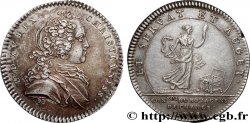
Type : Médaille de la Place de la Bourse et de la statue équestre de Louis XV
Date: 1733
Mint name / Town : 33 - Bordeaux
Metal : copper
Diameter : 55,2 mm
Orientation dies : 12 h.
Engraver DUVIVIER Jean (1687-1761)
Weight : 104,8 g.
Edge : lisse
Puncheon : sans poinçon
Coments on the condition:
Belle et intéressante médaille, avec une jolie patine brune mais avec des taches vert de gris au revers et des rayures au droit
Catalogue references :
Obverse
Obverse legend : CIVITAS BURDIGAL - OPTIMO PRINCIPI // MDCCXXXIII.
Obverse description : Statue équestre de Louis XV, signé à droite : DU VIVIER F..
Obverse translation : La ville de Bordeaux au meilleur des princes.
Reverse
Reverse legend : PRAESIDIUM ET DECUS.
Reverse description : Place de la Bourse à Bordeaux.
Commentary
La place de la Bourse est la première brèche dans les remparts du Moyen Âge et est destinée à servir d’écrin à la statue équestre, détruite à la Révolution, du roi de France Louis XV. Inaugurée en 1749, elle est le symbole de la prospérité de la ville. Successivement appelée place Royale, place de la Liberté pendant la Révolution, place impériale sous Napoléon Ier, puis à nouveau place Royale à la Restauration. En 1848, à la chute de Louis-Philippe Ier, elle devient place de la Bourse.
L’intendant Boucher veut ouvrir la ville sur le fleuve. Il souhaite moderniser Bordeaux et offrir un visage de la ville plus accueillant à l'étranger qui vient par la rive droite de la Garonne. On supprime une partie des murailles qui ceinturent Bordeaux et on construit une place Royale. Une statue équestre du roi Louis XV est placée en son centre.
À la Révolution, la statue est remplacée par un arbre de la liberté. Elle prend le nom de « Place Impériale » à l'occasion de la venue de Napoléon Ier.
En 1828, sous la Restauration, la ville élève une modeste fontaine, en forme de colonne de marbre rose surmontée d'un chapiteau blanc et d'un globe, à l'emplacement de la statue équestre disparue à la Révolution. En 1869, elle est remplacée par l'actuelle « fontaine des Trois Grâces » représentant Aglaé, Euphrosyne et Thalie, les filles de Zeus, dessinée par Louis Visconti, sculptée par Charles Gumery et coulée par la fonderie Thiébaut Frères.
Intimement liée à l’histoire de la place Royale (actuelle place de la Bourse), l’édification de la statue équestre de Louis XV interviendra à Bordeaux plus tard que dans d’autres villes en raison de la forte rancune que gardait notre cité à l’égard du roi, suite aux durs châtiments infligés lors de la révolte de 1675.
En savoir plus sur http://www.bordeaux-gazette.com/histoire-de-la-place-royale-et-de-la-statue-equestre-de-louis-xv.html#w9oAm7FwsHWo7wJk.99.
The Place de la Bourse is the first breach in the medieval ramparts and is intended to serve as a setting for the equestrian statue, destroyed during the Revolution, of the King of France Louis XV.. Inaugurated in 1749, it is the symbol of the city's prosperity. Successively called Place Royale, Place de la Liberté during the Revolution, Place Imperiale under Napoleon I, then Place Royale again during the Restoration. In 1848, after the fall of Louis-Philippe I, it became Place de la Bourse..
Intendant Boucher wants to open the city to the river. He wants to modernize Bordeaux and offer a more welcoming face of the city to foreigners who come via the right bank of the Garonne.. Part of the walls surrounding Bordeaux were removed and a Royal Square was built.. An equestrian statue of King Louis XV is placed in its center.
During the Revolution, the statue was replaced by a tree of liberty. It took the name of “Place Impériale” on the occasion of the arrival of Napoleon I.
In 1828, during the Restoration, the town erected a modest fountain, in the form of a pink marble column topped with a white capital and a globe, on the site of the equestrian statue that had disappeared during the Revolution.. In 1869, it was replaced by the current “Fountain of the Three Graces” representing Aglaë, Euphrosyne and Thalie, the daughters of Zeus, designed by Louis Visconti, sculpted by Charles Gumery and cast by the Thiébaut Frères foundry..
Closely linked to the history of the Place Royale (now Place de la Bourse), the construction of the equestrian statue of Louis XV took place in Bordeaux later than in other cities due to the strong resentment our city held against the king, following the harsh punishments inflicted during the revolt of 1675..
Learn more at http://www. Bordeaux Gazette. com/history-of-the-place-royale-and-the-equestrian-statue-of-louis-xv. html#w9oAm7FwsHWo7wJk. 99
L’intendant Boucher veut ouvrir la ville sur le fleuve. Il souhaite moderniser Bordeaux et offrir un visage de la ville plus accueillant à l'étranger qui vient par la rive droite de la Garonne. On supprime une partie des murailles qui ceinturent Bordeaux et on construit une place Royale. Une statue équestre du roi Louis XV est placée en son centre.
À la Révolution, la statue est remplacée par un arbre de la liberté. Elle prend le nom de « Place Impériale » à l'occasion de la venue de Napoléon Ier.
En 1828, sous la Restauration, la ville élève une modeste fontaine, en forme de colonne de marbre rose surmontée d'un chapiteau blanc et d'un globe, à l'emplacement de la statue équestre disparue à la Révolution. En 1869, elle est remplacée par l'actuelle « fontaine des Trois Grâces » représentant Aglaé, Euphrosyne et Thalie, les filles de Zeus, dessinée par Louis Visconti, sculptée par Charles Gumery et coulée par la fonderie Thiébaut Frères.
Intimement liée à l’histoire de la place Royale (actuelle place de la Bourse), l’édification de la statue équestre de Louis XV interviendra à Bordeaux plus tard que dans d’autres villes en raison de la forte rancune que gardait notre cité à l’égard du roi, suite aux durs châtiments infligés lors de la révolte de 1675.
En savoir plus sur http://www.bordeaux-gazette.com/histoire-de-la-place-royale-et-de-la-statue-equestre-de-louis-xv.html#w9oAm7FwsHWo7wJk.99.
The Place de la Bourse is the first breach in the medieval ramparts and is intended to serve as a setting for the equestrian statue, destroyed during the Revolution, of the King of France Louis XV.. Inaugurated in 1749, it is the symbol of the city's prosperity. Successively called Place Royale, Place de la Liberté during the Revolution, Place Imperiale under Napoleon I, then Place Royale again during the Restoration. In 1848, after the fall of Louis-Philippe I, it became Place de la Bourse..
Intendant Boucher wants to open the city to the river. He wants to modernize Bordeaux and offer a more welcoming face of the city to foreigners who come via the right bank of the Garonne.. Part of the walls surrounding Bordeaux were removed and a Royal Square was built.. An equestrian statue of King Louis XV is placed in its center.
During the Revolution, the statue was replaced by a tree of liberty. It took the name of “Place Impériale” on the occasion of the arrival of Napoleon I.
In 1828, during the Restoration, the town erected a modest fountain, in the form of a pink marble column topped with a white capital and a globe, on the site of the equestrian statue that had disappeared during the Revolution.. In 1869, it was replaced by the current “Fountain of the Three Graces” representing Aglaë, Euphrosyne and Thalie, the daughters of Zeus, designed by Louis Visconti, sculpted by Charles Gumery and cast by the Thiébaut Frères foundry..
Closely linked to the history of the Place Royale (now Place de la Bourse), the construction of the equestrian statue of Louis XV took place in Bordeaux later than in other cities due to the strong resentment our city held against the king, following the harsh punishments inflicted during the revolt of 1675..
Learn more at http://www. Bordeaux Gazette. com/history-of-the-place-royale-and-the-equestrian-statue-of-louis-xv. html#w9oAm7FwsHWo7wJk. 99
Historical background
LOUIS XV THE BELOVED
(1/09/1715-10/05/1774)
Louis XV succeeded Louis XIV on September 1, 1715 and Philippe d'Orléans was sole regent. The quadruple alliance in 1717 aims to maintain the European balance with France, Austria, England and the United Provinces. During his visit to France, Tsar Peter I signed a bilateral treaty of understanding. In 1718, Abbé Dubois became Secretary of State for Foreign Affairs. Sacred Archbishop of Cambrai in 1720, Prime Minister in 1722, he died on August 10, 1723. France declared war on Spain in 1719 to prevent Philip V from overthrowing the Regent. The capture of San Sebastian and Hondarribia marks the end of hostilities. In 1720, Philippe V joined the Quadruple Alliance and renounced the throne of France by the Treaty of Madrid. The first Masonic lodge was founded in France in 1721. Louis XV was crowned at the age of 12 on October 25, 1722. On February 15, 1723, he was declared of age. The regent is replaced by the Duke of Bourbon who becomes prime minister. Philippe d'Orléans died on December 2.
 Report a mistake
 Print the page
 Share my selection
 Ask a question
 Consign / sell
Related articles

 Full data



Your Recently Viewed Items
50 Nouveaux Francs HENRI IV FRANCE 1959 F.58.02 VF-
90.00 €

100 Nouveaux Francs BONAPARTE FRANCE 1959 F.59.03 XF-
65.00 €

100 Francs LUC OLIVIER MERSON grands cartouches FRANCE 1932 F.24.11 VF
20.00 €
FRANCIS I Douzain aux salamandres, 1er type 24/02/1540 Rouen XF
150.00 €
BELGIUM - UNITED STATES OF BELGIUM Lion d’argent ou pièce de 3 florins 1790 B
500.00 €

RUSSIA - CATHERINE II Polushka (quart de kopeck) monograme de Catherine II / sai
250.00 €
cgbfr.com numismatists


