


fjt_116727 - GAZ (LIGHTING...) Compagnie d’éclairage au gaz de METZ n.d.

Not available.
Item sold on our e-shop (2020)
Price : 175.00 €
Item sold on our e-shop (2020)
Price : 175.00 €
Type : Compagnie d’éclairage au gaz de METZ
Date: n.d.
Metal : silver
Diameter : 31 mm
Orientation dies : 12 h.
Edge : lisse
Puncheon : (main) ARGENT
Rarity : R1
Coments on the condition:
Nombreux petits chocs de manipulation
Obverse
Obverse legend : FIAT - LUX.
Obverse description : Un ange portant une torche rayonnante, le pied posé sur un globe terrestre ; signature SALMSON F..
Obverse translation : (Que la lumière soit).
Reverse
Reverse legend : * COMPAGNIE D'ÉCLAIRAGE AU GAZ - METZ.
Reverse description : Couronne tourelée dans un cercle perlé, au-dessous METZ.
Commentary
Le gaz naturel était connu depuis l'Antiquité notamment en Perse mais ce n'est qu'à la fin du XVIIIe siècle que l'idée d'un éclairage au gaz apparut. Le procédé ne se répandit que dans la première moitié du XIXe siècle notamment à partir de 1820. Le gaz utilisé était obtenu par distillation de la houille et servait à éclairer les rues puis les logements. Il servit par la suite comme chauffage mais disparut pour l'éclairage en raison de la diffusion de l'éclairage électrique dès 1880.
Natural gas had been known since antiquity, particularly in Persia, but it was not until the end of the 18th century that the idea of gas lighting appeared. The process did not spread until the first half of the 19th century, particularly from 1820. The gas used was obtained by distillation of coal and was used to light the streets and then the dwellings. It was later used as heating but disappeared for lighting due to the spread of electric lighting from 1880.
Natural gas had been known since antiquity, particularly in Persia, but it was not until the end of the 18th century that the idea of gas lighting appeared. The process did not spread until the first half of the 19th century, particularly from 1820. The gas used was obtained by distillation of coal and was used to light the streets and then the dwellings. It was later used as heating but disappeared for lighting due to the spread of electric lighting from 1880.
Historical background
GAZ (LIGHTING...)
Natural gas had been known since antiquity, particularly in Persia, but it was not until the end of the 18th century that the idea of gas lighting appeared. The process did not spread until the first half of the 19th century, particularly from 1820. The gas used was obtained by distillation of coal and was used to light the streets and then the dwellings. It was later used as heating but disappeared for lighting due to the spread of electric lighting from 1880..
 Report a mistake
 Print the page
 Share my selection
 Ask a question
 Consign / sell
Related articles
 Full data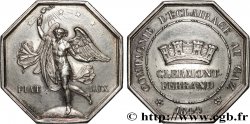


Your Recently Viewed Items

5 centimes Cérès 1893 Paris F.118/35 MS66 PCGS
280.00 €
cgbfr.com numismatists


