


fjt_632544 - CORPORATIONS Verriers, Fayenciers, Émailleurs, Patenôtriers 1767

350.00 €(Approx. 392.00$ | 294.00£)
Quantity
Add to your cart

Type : Verriers, Fayenciers, Émailleurs, Patenôtriers
Date: 1767
Metal : gilt copper
Diameter : 28 mm
Orientation dies : 6 h.
Weight : 6,13 g.
Edge : cannelée
Rarity : R2
Coments on the condition:
Rayures au niveau de portrait
Catalogue references :
Obverse
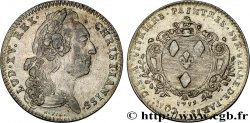
Obverse legend : LUDOV. XV. REX. CHRISTIANISS.
Obverse description : Buste à gauche de Louis XV, signé JCR.
Obverse translation : Louis XV, roi très chrétien.
Reverse
Reverse legend : MDS. VERRIERS. FAYANCIERS. EMAILLEURS. PATENOTRIERS. 1767.
Reverse description : Un oeil et XII dans un cercle suspendu à un noeud. Dessous, chapelet, vase et rameaux.
Commentary
Les paternôtriers existent depuis le Moyen Âge, puisque l'on comptait par exemple quatorze d'entre eux à Paris sous le règne de Philippe le Bel.
Ils formaient quatre corporations (ou trois confréries) décrites dans le Livre des métiers d'Étienne Boileau :
patenôtriers d'ambre et de jais (ou jaïs, jayet, gaïet)
patenôtriers de corail et de coquilles de nacre
patenôtriers d'os et corne
patenôtriers de boucles (boules et anneau pour vêtements)
Les apprentis, enfants d'au moins douze ans, passaient entre cinq, huit (os) dix (jais) et douze (corail) années d'apprentissage pour devenir maîtres émailleurs et s'ils prenaient la fuite, le maître patenôtrier devait les attendre au moins une année et un jour. L'entrée dans la confrérie était payante (5 sous).
Voir de nombreux autres détails à http://fr.wikipedia.org/wiki/Paten%C3%B4trier.
Paternosters have existed since the Middle Ages, since there were, for example, fourteen of them in Paris during the reign of Philip the Fair. They formed four corporations (or three brotherhoods) described in the Book of Trades by Étienne Boileau: paternosters of amber and jet (or jaïs, jayet, gaïet) paternosters of coral and mother-of-pearl shells paternosters of bone and horn paternosters of buckles (balls and rings for clothing) The apprentices, children of at least twelve years old, spent between five, eight (bone), ten (jet) and twelve (coral) years of apprenticeship to become master enamelers and if they ran away, the master paternoster had to wait for them at least a year and a day. Entry into the brotherhood was paid (5 sous). See many other details at http://fr.wikipedia.org/wiki/Paten%C3%B4trier
Historical background
CORPORATIONS
In Rome, groups of artisans already existed: forming a college placed under the protection of a divinity, with a common house and fund. In medieval Europe, probably from religious brotherhoods, economic groups were formed between merchants called hanse or ghilde.. With the development of trade, craftsmen organized themselves into trade bodies or communities which brought together all those who practiced the same profession: masters, journeymen or apprentices.. To enter the body, you had to "swear" the profession. Alongside, there were free professions that could be practiced by all.. Each corps was headed by a collegial management responsible for enforcing the regulations of the trade, protecting the trade from competition and directing the mutual benefit society.. At the end of the 17th century, the king began to sell the functions of jurors and corporate trustees as hereditary offices, which led to serious financial difficulties at a time when the corporations no longer met the new economic requirements of the development of industry and business concentration. It is also in England that the corporations disappeared spontaneously because of the industrial revolution.. The corporations will be abolished in France in 1791 by the Constituent Assembly.
 Report a mistake
 Print the page
 Share my selection
 Ask a question
 Consign / sell
Related articles
 Full data


cgbfr.com numismatists


