


fjt_1118462 - CORPORATIONS Jeton, affinages, refrappe (1744)

100.00 €(Approx. 113.00$ | 85.00£)
Quantity
Add to your cart

Type : Jeton, affinages, refrappe
Date: (1744)
Metal : silver
Diameter : 33,5 mm
Orientation dies : 12 h.
Weight : 13,80 g.
Edge : lisse + crabe + losange ARGENT
Puncheon : Crabe
Coments on the condition:
Quelques fines rayures. Restes de brillant de frappe
Obverse
Obverse legend : QUOD. REGIT. NOTAT.
Obverse description : Un paysage montagneux éclairé par un soleil ; à l’exergue : .1744..
Obverse translation : (Il marque ce qu'il régit).
Reverse
Reverse legend : AFFINAGES/ DE/ LYON..
Reverse description : Inscription en trois lignes sous une rosette : .
Commentary
Second type avec les caractères grands et finsLes affineurs travaillaient à la Monnaie. Leur nombre est réglementé au XVIIe siècle et leur fonction érigée en office, ils sont quatre en 1689 sous le contrôle de la Cour des Monnaies. En 1760, leurs offices sont réunis à la corporation des tireurs d’or. Selon Jean Tricou, ces jetons se rapportent au contrôle intérieur, ce seraient des laissez-passer et non une rémunération .
Second type with large and fine characters. Refiners worked at the Mint. Their number was regulated in the 17th century and their function established as an office; there were four of them in 1689 under the control of the Court of Mints. In 1760, their offices were merged with the corporation of gold drawers. According to Jean Tricou, these tokens relate to internal control; they would be passes and not remuneration.
Second type with large and fine characters. Refiners worked at the Mint. Their number was regulated in the 17th century and their function established as an office; there were four of them in 1689 under the control of the Court of Mints. In 1760, their offices were merged with the corporation of gold drawers. According to Jean Tricou, these tokens relate to internal control; they would be passes and not remuneration.
Historical background
CORPORATIONS
In Rome, groups of artisans already existed: forming a college placed under the protection of a divinity, with a common house and fund. In medieval Europe, probably from religious brotherhoods, economic groups were formed between merchants called hanse or ghilde.. With the development of trade, craftsmen organized themselves into trade bodies or communities which brought together all those who practiced the same profession: masters, journeymen or apprentices.. To enter the body, you had to "swear" the profession. Alongside, there were free professions that could be practiced by all.. Each corps was headed by a collegial management responsible for enforcing the regulations of the trade, protecting the trade from competition and directing the mutual benefit society.. At the end of the 17th century, the king began to sell the functions of jurors and corporate trustees as hereditary offices, which led to serious financial difficulties at a time when the corporations no longer met the new economic requirements of the development of industry and business concentration. It is also in England that the corporations disappeared spontaneously because of the industrial revolution.. The corporations will be abolished in France in 1791 by the Constituent Assembly.
 Report a mistake
 Print the page
 Share my selection
 Ask a question
 Consign / sell
Related articles

 Full data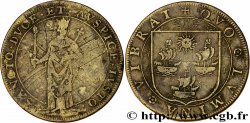


Your Recently Viewed Items

LOUIS XVI Sol dit "à l'écu" 1790 Lille XF
110.00 €

VARIOUS CHARACTERS Médaille, Thomas Guitel XF
100.00 €
cgbfr.com numismatists


