


fme_1155279 - CHARLES X Médaille, Charles X, La Vendée Heureuse

80.00 €(Approx. 92.80$ | 68.80£)
Quantity
Add to your cart

Type : Médaille, Charles X, La Vendée Heureuse
Date: (1825)
Metal : copper
Diameter : 50 mm
Orientation dies : 12 h.
Engraver CAQUÉ Armand Auguste (1795-1881) / PUYMAURIN Jean-Pierre Marcassus (1757-1841)
Weight : 65,40 g.
Edge : lisse
Puncheon : sans poinçon
Coments on the condition:
Sur l’avers et le revers, plusieurs tâches d’oxydation et des fines rayures. Sur la tranche, des rayures, des tâches d’oxydation et quelques coups
Obverse
Obverse legend : SPES OLIM - NUNC SOLARIUM.
Obverse description : Tête de profil à gauche. Signé : CAQUE F. DE PUYMAURIN. N. F..
Reverse
Reverse legend : A / CHARLES X / LA VENDEE / HEUREUSE / - / .
Reverse description : Légende en 4 lignes, entourée d’une couronne de laurier et d’eucalyptus. Signé : DE CURZAY. E. .
Historical background
CHARLES X
(09/16/1824-08/2/1830)
Charles X, grandson of Louis XV and younger brother of Louis XVI, is also known by his title of Count of Artois. He succeeded Louis XVIII on September 16, 1824. He is the last king crowned in Reims, May 29, 1825. His reign begins with liberal measures without follow-up. On April 28, 1825, the law of compensation of emigrants of one billion gold francs is voted. In November, the funeral of General Foy is the occasion of a liberal demonstration. Villele, Prime Minister since December 1821, dissolves the Chamber, but finds himself with a reinforced liberal opposition. He takes reactionary measures such as the law of compensation for emigrants of one billion gold francs or the dismissal of the National Guard. On January 4, 1828, he was replaced by Martignac who tried to appease. But he was quickly dismissed on August 6, 1829 and he was replaced by a representative of the ultras, Polignac. The Battle of Hernani, February 25, 1830, marks the beginning of the Romantic Revolution. The king dissolves the Chamber on May 16, 1830 but the new chamber elected in July again has a liberal majority. Charles X then promulgates four ordinances which aim to limit the powers and freedoms of the House and tend to suspend the charter of 1814. This provoked the July 27-29 revolution, better known as the "Trois Glorieuses". On August 2, 1830, Charles X abdicated in favor of his grandson Henri V after appointing Louis-Philippe lieutenant general of the kingdom but, to respect dynastic laws, he first abdicated in favor of his son and forced the latter to do the same afterwards; which means that King Louis XIX only reigned for about twenty minutes, to his great despair (just enough time to sign the act of abdication). .
 Report a mistake
 Print the page
 Share my selection
 Ask a question
 Consign / sell
 Full data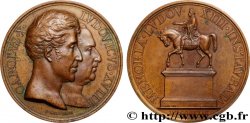
Your Recently Viewed Items

ISAAC II ANGELUS Aspron trachy (scyphate) VF/XF
70.00 €

REUNION - Third Republic 10 Centimes 1920 VF
120.00 €
HUGH CAPET Médaille, Hugues Capet, n°15 MS
100.00 €

CHARLES X Médaille, Statue équestre de Louis XIII AU
75.00 €

MALAYSIA 10 Cents Georges VI 1941 XF
20.00 €

RUSSIA - ELIZABETH 5 Kopecks 1758 Saint-Petersbourg VF
120.00 €
cgbfr.com numismatists


