


E-auction 152-90478 - bpv_153700 - CARACALLA Tétradrachme syro-phénicien

You must signin and be an approved bidder to bid, LOGIN TO BID. Accounts are subject to approval and the approval process takes place within 48 hours. Do not wait until the day a sale closes to register. Clicking on « bid » constitutes acceptance of the terms of use of cgb.fr private e-auctions.
Bids must be placed in whole Euro amounts only. The sale will start closing at the time stated on the item description; any bids received at the site after the closing time will not be executed. Transmission times may vary and bids could be rejected if you wait until the last second. For further information ckeck the E-auctions F.A.Q.
NO BUYER'S FEE.
NO BUYER'S FEE.
| Estimate : | 80 € |
| Price : | 16 € |
| Maximum bid : | 27 € |
| End of the sale : | 14 March 2016 15:15:30 |
| bidders : | 7 bidders |
Type : Tétradrachme syro-phénicien
Date: 215-217
Mint name / Town : Antioche, Syrie, Séleucie et Piérie
Metal : billon
Diameter : 26,00 mm
Orientation dies : 6 h.
Weight : 11,99 g.
Coments on the condition:
Bon centrage et bonne frappe, style caractéristique sans ambiguïté, nette usure de circulation sur les lauriers et le ventre de l’aigle, nettes traces de nettoyage
Catalogue references :
Predigree :
Cet exemplaire, qui provient de la trouvaille dite Syrie 1930, est le 0242_036
Obverse
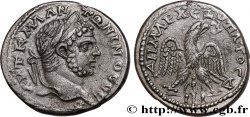
Obverse description : Tête laurée de Caracalla barbu à droite, l’un des rubans de la couronne de laurier passant sur l’épaule.
Obverse legend : AUT. K. M. A. - ANTWNEINOS .SEB.
Obverse translation : (L’empereur césar Marc Aurèle Antonin auguste).
Reverse
Reverse description : Aigle à gauche, ailes écartées, tête et queue à droite, sur une corne d’abondance, une étoile le plus souvent difforme entre les pattes, et une couronne perlée de lauriers dans son bec.
Reverse legend : DHMARC EX UPATOSTOD
Reverse translation : (Revêtu de la puissance tribunitienne consul pour la quatrième fois).
Commentary
Le Prieur 242 se caractérise, outre la présence de la corne d’abondance entre les pattes de l’aigle, par le style de l’aigle du revers, au style de Laodicée, très statique avec le haut des ailes traité en petits cercles juxtaposés.
À noter, Richard McAlee ne différencie par les styles et regroupe les Prieur 240 , 241, 242, 243 et 244 sous la seule référence 693.
L’avers est le fruit d’un seul graveur sauf deux exemplaires dont l’un est illustré dans le Prieur sous la référence CP 978. Il faut bien avouer que ces deux graveurs sont particulièrement médiocres, tel celui de notre exemplaire. Le lien avec l’atelier de Laodicée n’est donc pas limité au style de l’aigle mais aussi à la qualité des portraits : l’atelier de Laodicée, pour le quatrième consulat de Caracalla, est le champion incontesté, dans la région, de la gravure à la serpe.
Le graveur de notre exemplaire est spécifique à cette série et ne se retrouve pas ailleurs.
Ces frappes énigmatiques, dites émissions de guerre, sont classées par convenance à Antioche, tant par Bellinger que par Prieur, bien que tous deux considèrent que cette attribution est certainement fausse. La meilleure preuve est la disparition sur ces émissions du Delta Eta dans le champ de revers, spécifique à Antioche et que l’on y retrouve inchangé sous Macrin et Diaduménien. On pense donc à des ateliers militaires itinérants, suivant les légions et frappant à la demande. Ces émissions sont particulièrement intéressantes et mal connues, une recherche des liaisons de coins et une typologie des graveurs pourrait améliorer la connaissance des ateliers militaires à cette période.
Les caractéristiques communes de ces émissions de guerre sont un style peu recherché, des symboles nouveaux et difficiles à attribuer à un atelier particulier, souvent des graveurs répertoriés pour des ateliers bien connus où, en revanche, on ne trouve aucune émission de guerre. Souvent, des frappes de graveurs différents mais de symboles identiques ont été regroupées alors qu’une analyse des liaisons de coins montrera peut-être qu’il s’agit en fait de plusieurs séries nettement séparées.
On remarquera, à propos des émissions de guerre en général, qu’aucune n’est connue à l’effigie de Macrin, le contraire étant la règle pour pratiquement toutes les séries identifiées pour des villes. C’est une preuve supplémentaire que ces séries sont exclusivement liées à la guerre parthique, qui s’interrompt dès la prise du pouvoir par Macrin, et non à une ou des municipalités qui n’auraient pas encore été identifiées.
On note que les sigma sont gravés en C.
Dans la base TSP maintenue par Michel Prieur, soixante-dix exemplaires sont maintenant répertoriés dont en musées Paris (6), Yale (2 ex Doura), ANS (2), Berne et Jérusalem, .
The Prior 242 is characterized, besides the presence of the horn of plenty between the eagle's legs, by the style of the eagle on the reverse, in the Laodicean style, very static with the top of the wings treated in small juxtaposed circles..
Note that Richard McAlee does not differentiate between styles and groups the Prieur 240, 241, 242, 243 and 244 under the single reference 693..
The obverse is the work of a single engraver except for two examples, one of which is illustrated in the Prior under the reference CP 978. It must be admitted that these two engravers are particularly mediocre, like that of our example.. The link with the Laodicean workshop is therefore not limited to the style of the eagle but also to the quality of the portraits: the Laodicean workshop, for the fourth consulate of Caracalla, is the undisputed champion, in the region, of billhook engraving..
The engraver of our example is specific to this series and is not found elsewhere.
These enigmatic strikes, called war emissions, are classified for convenience in Antioch, both by Bellinger and by Prieur, although both consider that this attribution is certainly false. The best proof is the disappearance on these issues of Delta Eta in the reverse field, specific to Antioch and which we find there unchanged under Macrinus and Diadumenian. We therefore think of itinerant military workshops, following the legions and striking on demand.. These issues are particularly interesting and poorly known; research into die links and a typology of engravers could improve knowledge of military workshops during this period..
The common characteristics of these war issues are an unsophisticated style, new symbols that are difficult to attribute to a particular workshop, and often engravers listed for well-known workshops where, on the other hand, no war issues are found.. Often, strikes by different engravers but with identical symbols have been grouped together, whereas an analysis of the die links will perhaps show that these are in fact several clearly separate series..
It should be noted, with regard to war issues in general, that none are known to bear the image of Macrinus, the opposite being the rule for practically all series identified for cities.. This is further proof that these series are exclusively linked to the Parthian War, which ended as soon as Macrinus took power, and not to one or more municipalities that have not yet been identified..
Note that the sigmas are engraved in C.
In the TSP database maintained by Michel Prieur, seventy examples are now listed, including in museums in Paris (6), Yale (2 ex Doura), ANS (2), Bern and Jerusalem,
À noter, Richard McAlee ne différencie par les styles et regroupe les Prieur 240 , 241, 242, 243 et 244 sous la seule référence 693.
L’avers est le fruit d’un seul graveur sauf deux exemplaires dont l’un est illustré dans le Prieur sous la référence CP 978. Il faut bien avouer que ces deux graveurs sont particulièrement médiocres, tel celui de notre exemplaire. Le lien avec l’atelier de Laodicée n’est donc pas limité au style de l’aigle mais aussi à la qualité des portraits : l’atelier de Laodicée, pour le quatrième consulat de Caracalla, est le champion incontesté, dans la région, de la gravure à la serpe.
Le graveur de notre exemplaire est spécifique à cette série et ne se retrouve pas ailleurs.
Ces frappes énigmatiques, dites émissions de guerre, sont classées par convenance à Antioche, tant par Bellinger que par Prieur, bien que tous deux considèrent que cette attribution est certainement fausse. La meilleure preuve est la disparition sur ces émissions du Delta Eta dans le champ de revers, spécifique à Antioche et que l’on y retrouve inchangé sous Macrin et Diaduménien. On pense donc à des ateliers militaires itinérants, suivant les légions et frappant à la demande. Ces émissions sont particulièrement intéressantes et mal connues, une recherche des liaisons de coins et une typologie des graveurs pourrait améliorer la connaissance des ateliers militaires à cette période.
Les caractéristiques communes de ces émissions de guerre sont un style peu recherché, des symboles nouveaux et difficiles à attribuer à un atelier particulier, souvent des graveurs répertoriés pour des ateliers bien connus où, en revanche, on ne trouve aucune émission de guerre. Souvent, des frappes de graveurs différents mais de symboles identiques ont été regroupées alors qu’une analyse des liaisons de coins montrera peut-être qu’il s’agit en fait de plusieurs séries nettement séparées.
On remarquera, à propos des émissions de guerre en général, qu’aucune n’est connue à l’effigie de Macrin, le contraire étant la règle pour pratiquement toutes les séries identifiées pour des villes. C’est une preuve supplémentaire que ces séries sont exclusivement liées à la guerre parthique, qui s’interrompt dès la prise du pouvoir par Macrin, et non à une ou des municipalités qui n’auraient pas encore été identifiées.
On note que les sigma sont gravés en C.
Dans la base TSP maintenue par Michel Prieur, soixante-dix exemplaires sont maintenant répertoriés dont en musées Paris (6), Yale (2 ex Doura), ANS (2), Berne et Jérusalem, .
The Prior 242 is characterized, besides the presence of the horn of plenty between the eagle's legs, by the style of the eagle on the reverse, in the Laodicean style, very static with the top of the wings treated in small juxtaposed circles..
Note that Richard McAlee does not differentiate between styles and groups the Prieur 240, 241, 242, 243 and 244 under the single reference 693..
The obverse is the work of a single engraver except for two examples, one of which is illustrated in the Prior under the reference CP 978. It must be admitted that these two engravers are particularly mediocre, like that of our example.. The link with the Laodicean workshop is therefore not limited to the style of the eagle but also to the quality of the portraits: the Laodicean workshop, for the fourth consulate of Caracalla, is the undisputed champion, in the region, of billhook engraving..
The engraver of our example is specific to this series and is not found elsewhere.
These enigmatic strikes, called war emissions, are classified for convenience in Antioch, both by Bellinger and by Prieur, although both consider that this attribution is certainly false. The best proof is the disappearance on these issues of Delta Eta in the reverse field, specific to Antioch and which we find there unchanged under Macrinus and Diadumenian. We therefore think of itinerant military workshops, following the legions and striking on demand.. These issues are particularly interesting and poorly known; research into die links and a typology of engravers could improve knowledge of military workshops during this period..
The common characteristics of these war issues are an unsophisticated style, new symbols that are difficult to attribute to a particular workshop, and often engravers listed for well-known workshops where, on the other hand, no war issues are found.. Often, strikes by different engravers but with identical symbols have been grouped together, whereas an analysis of the die links will perhaps show that these are in fact several clearly separate series..
It should be noted, with regard to war issues in general, that none are known to bear the image of Macrinus, the opposite being the rule for practically all series identified for cities.. This is further proof that these series are exclusively linked to the Parthian War, which ended as soon as Macrinus took power, and not to one or more municipalities that have not yet been identified..
Note that the sigmas are engraved in C.
In the TSP database maintained by Michel Prieur, seventy examples are now listed, including in museums in Paris (6), Yale (2 ex Doura), ANS (2), Bern and Jerusalem,
Historical background
CARACALLA
(05/27/196-04/8/217)
Augustus
After Geta's assassination, Caracalla decreed the "damnatio memoriæ" of his brother. The "Constitution Antoniniana" was promulgated in 212. All the inhabitants of the Empire became Roman citizens. The following year he undertook a campaign in Germania and won numerous victories over the Germans, Iapyges and Goths. He received the title of "Germanicus". The end of the reign was marked in 215 by the Monetary Reform and the creation of the Antoninianus. Caracalla begins a final campaign against the Parthians. He is assassinated after having celebrated his vicennalia.
 Report a mistake
 Print the page
 Share my selection
 Ask a question
 Consign / sell
Related articles

 Full data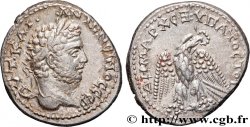



Your Recently Viewed Items

ALEXIUS III ANGELUS-COMNENUS Aspron trachy (scyphate) VF
50.00 €

CONSTANTINE I THE GREAT Follis ou nummus VF
4.00 €

2 francs Georges Guynemer 1997 F.275/2 MS63
11.00 €
cgbfr.com numismatists


