


fjt_08392 - BURGUNDY (STATES OF...) Nouvelles levées de fonds 1648

Not available.
Item sold on our e-shop (2015)
Price : 95.00 €
Item sold on our e-shop (2015)
Price : 95.00 €
Type : Nouvelles levées de fonds
Date: 1648
Metal : brass
Diameter : 28 mm
Orientation dies : 6 h.
Edge : lisse
Rarity : R1
Catalogue references :
Obverse
Obverse legend : COMITIA BVRGVNDIAE ; À L'EXERGUE : 1648.
Obverse description : Armes anciennes de Bourgogne.
Obverse translation : Etats de Bourgogne.
Reverse
Reverse legend : RESISTIT. PAVCIS. OBRVITVR. PLVRIBVS.
Reverse description : Un bouclier sous une grêle de flèches sortant, selon Feuardent, des nuages.
Reverse translation : Il résiste quand il y en a peu mais il est écrasé quand il y en a beaucoup.
Commentary
Mystérieuse scène avec un bouclier céleste au revers. Celui-ci est présenté sur certains sites conspirationnistes américains comme étant une représentation d’une soucoupe volante “flying saucer”.
Si l’on considère que l’axe de ce jeton est à douze heures, le bouclier est en effet dans le ciel et les flèches montent du sol, contredisant la description qui voudrait que les flèches tombent du ciel.
Le duc d’Enghien, devenu prince de Condé par le décès de son père le remplace dans son gouvernement de Bourgogne. Il demande de nouveaux moyens pour faire la guerre, ce que les États ne peuvent lui refuser en raison de sa gloire. On peut noter que les fleurs de lis ont disparu des armes et qu’il ne subsiste que le vieux blason provincial.
Mysterious scene with a celestial shield on the reverse. This is presented on some American conspiracy sites as a representation of a flying saucer. If we consider that the axis of this token is at twelve o'clock, the shield is indeed in the sky and the arrows rise from the ground, contradicting the description that the arrows fall from the sky. The Duke of Enghien, who became Prince of Condé by the death of his father, replaces him in his government of Burgundy. He requests new means of waging war, which the States cannot refuse him because of his glory. It can be noted that the fleurs-de-lis have disappeared from the arms and that only the old provincial coat of arms remains.
Si l’on considère que l’axe de ce jeton est à douze heures, le bouclier est en effet dans le ciel et les flèches montent du sol, contredisant la description qui voudrait que les flèches tombent du ciel.
Le duc d’Enghien, devenu prince de Condé par le décès de son père le remplace dans son gouvernement de Bourgogne. Il demande de nouveaux moyens pour faire la guerre, ce que les États ne peuvent lui refuser en raison de sa gloire. On peut noter que les fleurs de lis ont disparu des armes et qu’il ne subsiste que le vieux blason provincial.
Mysterious scene with a celestial shield on the reverse. This is presented on some American conspiracy sites as a representation of a flying saucer. If we consider that the axis of this token is at twelve o'clock, the shield is indeed in the sky and the arrows rise from the ground, contradicting the description that the arrows fall from the sky. The Duke of Enghien, who became Prince of Condé by the death of his father, replaces him in his government of Burgundy. He requests new means of waging war, which the States cannot refuse him because of his glory. It can be noted that the fleurs-de-lis have disappeared from the arms and that only the old provincial coat of arms remains.
Historical background
BURGUNDY (STATES OF...)
The Estates of Burgundy have been the subject of several studies: Rossignol in 1851; Preux in the ASFN in 1867 and Fontenay, Manuel de l'amateur de tokens, 1854 from which we borrow many descriptions of tokens as well as the following comments: "The States of Burgundy voted taxes, aid and subsidies. The province regulated its economic administration in general assemblies, and after the sessions, the execution of the votes belonged to Elected Generals taken from all ranks of society and whose conduct was censured at each triennium by special and independent commissioners.. The Elect made the distribution of taxes, and for this they appointed by right all their officers, ordered the public constructions and the repairs of the main roads, regulated the raising and the expenditure of the militias, operated the liquidation of the stages, the adjudication of the grants on the Saône and held in their hands the important management of the floods on the salt that could not be brought to Burgundy without their approval. The inhabitants were not translated outside their jurisdiction. The States had the right to reimburse from their finances any office charged to the country; the king could not create new ones without the consent of the province, much less dispose of the province without its consent. (. . . ) A few words will suffice to give an idea of the organization of the States of Burgundy. They consisted of the three social positions or the three Orders of society, the Clergy, the Nobility and the Third Estate. The first represented wisdom, enlightenment and kindness; the second, strength, glory and greatness; the third, industry, commerce and agriculture. You couldn't find anything fairer and more complete. The numerical inequality of the three Orders disappeared at the time of the vote: at the solemn moment of the decision, there were only three votes; and that of the Third, which would have been insignificant if we had counted by heads, had the power to tip the scales in whichever direction it wished.. The representation of powers was completed by the presence in the States of the envoys of the Duke and later of those of His Majesty. The Chosen of the first had the mission to watch in a very special way over the interests of the ducal crown and to edify it on all that was happening in the administration of finances.. Under the monarchical regime, the king still relied on the Parliament whose president spoke at the opening of the States to support the demands of the crown; he had moreover the intendant and the governor of the province; then the chamber of accounts whose Masters were more accustomed than anyone to the handling of tokens. After a session of one month, the general assembly left to administer the country, for three years, a small assembly or Chamber of Elected Generals composed, like it, of the interested elements, that is to say belonging to the three Orders.. The elected king, two deputies of the chamber of accounts, the treasurer general and the intendant of the province had the right to enter for the crown, like the two secretaries of the States, but without deliberative voice.. The Elect of the Nobility was the only elective; those of the Clergy and of the Tiers arrived alternately in the Chamber. The Church sometimes provided a bishop, sometimes an abbot, sometimes a dean of the province in turn. The representative of the Third Estate was successively a mayor of one of the fourteen towns listed on the Ferris wheel; and by privilege, this Order still had its born president, the mayor of Dijon. The small towns as well as the canons and the priors were not deprived of their share of power, because it was within them that most of the Alcades were recruited.. The Alcades formed a council of censorship which also sought out useful things to offer the country and supervised the operations of the Ferris wheel.. They composed a supreme council to protect the province against the error, negligence, ill will or ambition of its administrators.. In short, the great council was judged by the small.
 Report a mistake
 Print the page
 Share my selection
 Ask a question
 Consign / sell
Related articles

 Full data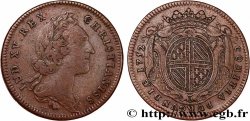


Your Recently Viewed Items
50 Francs LE VERRIER FRANCE 1949 F.20.11 VF+
15.00 €
GALLIA - SOUTH WESTERN GAUL - PETROCORII (Area of Perigueux) Bronze LVCCIOS au s
410.00 €

SYRIA - SELEUKID KINGDOM - ALEXANDER II ZEBINA Dichalque AU/XF
280.00 €

SYRIA - SELEUKID KINGDOM - ANTIOCHUS VII SIDETES Tétradrachme AU
420.00 €
Dix centimes Napoléon III, tête laurée 1863 Strasbourg F.134/11 MS60
250.00 €
20 Francs BLEU FRANCE 1913 F.10.03 VF
340.00 €
cgbfr.com numismatists


