


v57_0124 - ATTICA - ATHENS Tétradrachme
MONNAIES 57 (2013)
Starting price : 580.00 €
Estimate : 950.00 €
Realised price : 580.00 €
Number of bids : 1
Maximum bid : 780.00 €
Starting price : 580.00 €
Estimate : 950.00 €
Realised price : 580.00 €
Number of bids : 1
Maximum bid : 780.00 €
Type : Tétradrachme
Date: c. 410-405 AC.
Mint name / Town : Athènes, Attique
Metal : silver
Diameter : 23 mm
Orientation dies : 9 h.
Weight : 17,22 g.
Coments on the condition:
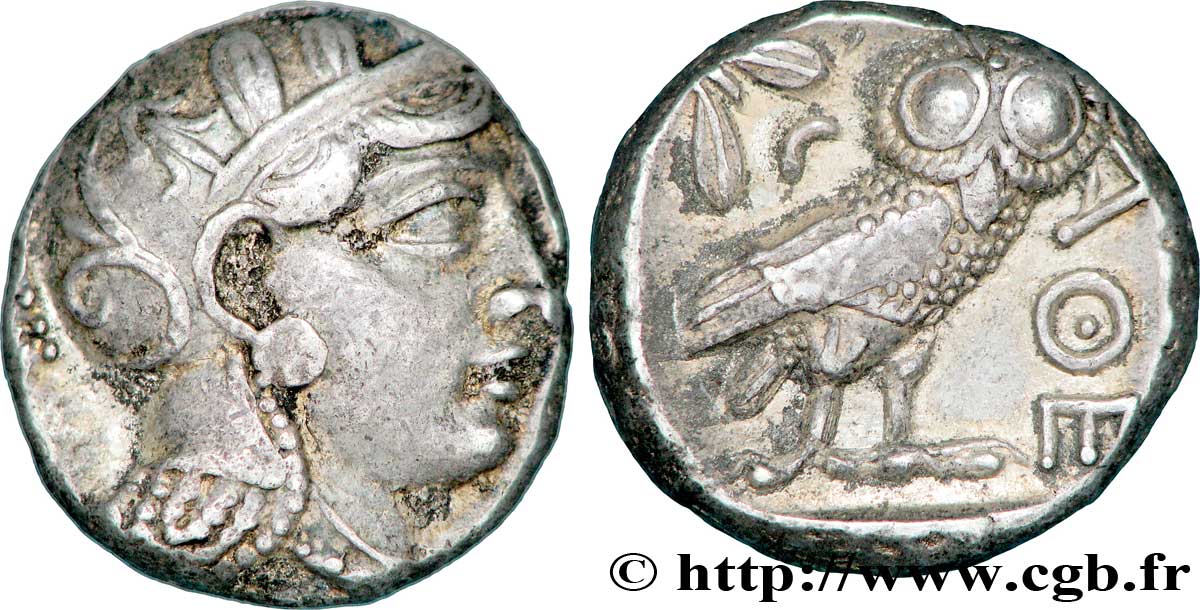
Exemplaire sur un petit flan ovale et épais, bien centré des deux côtés. Beau portrait d’Athéna bien venu à la frappe. Chouette ramassée de haut relief avec un plat sur l’aile médiane. Belle patine avec des reflets dorés
Catalogue references :
Obverse
Obverse legend : ANÉPIGRAPHE.
Obverse description : Tête d'Athéna à droite, coiffée du casque attique à cimier, orné de trois feuilles d'olivier et d'une palmette avec collier et boucles d'oreilles.
Reverse
Reverse description : Chouette debout à droite, la tête de face ; derrière, une branche d'olivier et un croissant ; le tout dans les restes d'un carré creux.
Reverse legend : AQE
Reverse translation : (Athènes).
Commentary
Le visage présente encore une expression archaïque. L’œil est traité en amande étiré et droit. La chevelure est tombante sur le cou et ramenée en arrière. Les feuilles d’olivier du casque sont normales. Au revers, la chouette est grande et élancée et les plumes descendent jusqu’aux serres de l’animal. Le carré creux est peu marqué. Nous sommes certainement en présence de l’un des derniers types frappés au Ve siècle avant J.-C.
The face still has an archaic expression. The eye is shaped like a stretched, straight almond. The hair falls down the neck and is swept back. The olive leaves on the helmet are normal. On the reverse, the owl is large and slender, and the feathers reach down to the animal's talons. The hollow square is not very marked. We are certainly in the presence of one of the last types struck in the 5th century BC.
The face still has an archaic expression. The eye is shaped like a stretched, straight almond. The hair falls down the neck and is swept back. The olive leaves on the helmet are normal. On the reverse, the owl is large and slender, and the feathers reach down to the animal's talons. The hollow square is not very marked. We are certainly in the presence of one of the last types struck in the 5th century BC.
Historical background
ATTICA - ATHENS
(5th century BC)
The fortune of Athens in the 5th century rests largely on the recovery of the treasury of the League of Delos which contained no less than five thousand talents of silver and which served to enrich and embellish Athens by oppressing the Allies. The Peloponnesian War (431-404 BC) put an end to Athenian hegemony. Pericles (449-429 BC) did not live long enough to witness the fall of the city. Thucydides immortalized this conflict in his work devoted to the Peloponnesian War, of which he was one of the actors before being himself ostracized, that is to say exiled.
 Report a mistake
 Print the page
 Share my selection
 Ask a question
 Consign / sell
Related articles

 Full data



Your Recently Viewed Items

20 Pesos CUBA 1985 P.FX09 UNC
6.00 €
THRACE - BYZANTION Drachme ou sicle AU
450.00 €

MACEDONIA - MACEDONIAN KINGDOM - PHILIP III ARRHIDAEUS Tetrobole AU
280.00 €

ATTICA - ATHENS Tétradrachme AU
550.00 €
ZEUGITANA - CARTHAGE Double shekel ou 1,5 shekel AU
650.00 €

SICILY - AKRAGAS Demi-shekel AU
2300.00 €
cgbfr.com numismatists


