


bpv_158437 - ANTONINUS PIUS Tétradrachme syro-phénicien

Not available.
Item sold on our e-shop (2018)
Price : 380.00 €
Item sold on our e-shop (2018)
Price : 380.00 €
Type : Tétradrachme syro-phénicien
Date: 139
Mint name / Town : Mopsus, Cilicie
Metal : silver
Diameter : 24 mm
Orientation dies : 6 h.
Weight : 13,23 g.
Rarity : R2
Coments on the condition:
Importante usure, décentré au droit, une bonne partie des légendes lisibles
Catalogue references :
Predigree :
Cet exemplaire est le 0728_004 de la base TSP
Obverse
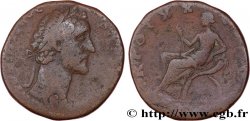
Obverse description : Buste lauré, drapé d’Antonin le Pieux à droite, vu de trois-quarts en arrière, (A*21).
Obverse legend : AUT KAIS T AIL AD ANTwNEINOS SEB EU P P
Obverse translation : (L’empereur césar Titus Aelius Hadrien Antonin auguste pieux père de la patrie).
Reverse
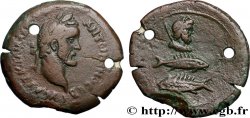
Reverse description : Aigle de face, ailes déployées, tête et queue à droite, sur une ligne de terre, un autel tripode et tricorne entre les pattes.
Reverse legend : ADRIANwN MOUEATwN
Reverse translation : (Des habitants de Mopsos d’Hadrien).
Commentary
La légende de droit n’est pas certaine dans la partie centrale, le seul exemplaire dans un état permettant la lecture, British Museum Coins 21,106, n°15 pl XVIII, 7, n’est pas parfaitement clair.
La datation de ce type, qui n’a pas été tentée dans le Prieur, est difficile faute de points de repère.
Les deux seuls points d’appui sont l’émission précédente pour Antonin le Pieux à tête nue, que nous avons datée de 138 AD et qui est identique à notre monnaie sauf, principalement, la couronne de laurier de l’empereur.
On peut donc supposer que cette émission suit immédiatement la précédente puisque la couronne de laurier est le symbole de l’imperator, par opposition au césar.
Nous préférons donc prendre la date de 139, bien qu’il soit plus que probable que les deux émissions se suivent exactement et sont toutes deux de 138.
On ignore tout de la signification, pour la ville et en général de l’objet représenté entre les pattes de l’aigle et que nous décrivons ambitieusement comme un autel tripode et tricorne mais qui pourrait aussi être un bétyle enchâssé ou une divinité comme Bes. Il existe à Byblos, sous Caracalla et Macrin, un autel qui ressemble à celui-ci mais aucun lien logique entre les deux.
Dans la base TSP maintenue par Michel Prieur, onze exemplaires sont maintenant répertoriés dont trois en musées, l’un au British Museum, déjà cité, un second à Berlin et l’autre à Paris, Fonds Général ex Waddington 4382.
The legend on the right is not certain in the central part, the only example in a state allowing reading, British Museum Coins 21,106, n°15 pl XVIII, 7, is not perfectly clear.
Dating of this type, which has not been attempted in the Prior, is difficult due to a lack of reference points..
The only two points of support are the earlier issue for Antoninus Pius with bare head, which we have dated to 138 AD and which is identical to our coinage except, mainly, for the emperor's laurel wreath.
We can therefore assume that this issue immediately follows the previous one since the laurel wreath is the symbol of the imperator, as opposed to the Caesar..
We therefore prefer to take the date of 139, although it is more than likely that the two issues follow each other exactly and are both from 138.
We know nothing about the significance, for the city and in general, of the object represented between the eagle's paws and which we ambitiously describe as a tripod and tricorn altar but which could also be an enshrined baetyl or a divinity like Bes.. There is an altar in Byblos, under Caracalla and Macrinus, which resembles this one but there is no logical link between the two..
In the TSP database maintained by Michel Prieur, eleven examples are now listed, including three in museums, one at the British Museum, already mentioned, a second in Berlin and the other in Paris, Fonds Général ex Waddington 4382
La datation de ce type, qui n’a pas été tentée dans le Prieur, est difficile faute de points de repère.
Les deux seuls points d’appui sont l’émission précédente pour Antonin le Pieux à tête nue, que nous avons datée de 138 AD et qui est identique à notre monnaie sauf, principalement, la couronne de laurier de l’empereur.
On peut donc supposer que cette émission suit immédiatement la précédente puisque la couronne de laurier est le symbole de l’imperator, par opposition au césar.
Nous préférons donc prendre la date de 139, bien qu’il soit plus que probable que les deux émissions se suivent exactement et sont toutes deux de 138.
On ignore tout de la signification, pour la ville et en général de l’objet représenté entre les pattes de l’aigle et que nous décrivons ambitieusement comme un autel tripode et tricorne mais qui pourrait aussi être un bétyle enchâssé ou une divinité comme Bes. Il existe à Byblos, sous Caracalla et Macrin, un autel qui ressemble à celui-ci mais aucun lien logique entre les deux.
Dans la base TSP maintenue par Michel Prieur, onze exemplaires sont maintenant répertoriés dont trois en musées, l’un au British Museum, déjà cité, un second à Berlin et l’autre à Paris, Fonds Général ex Waddington 4382.
The legend on the right is not certain in the central part, the only example in a state allowing reading, British Museum Coins 21,106, n°15 pl XVIII, 7, is not perfectly clear.
Dating of this type, which has not been attempted in the Prior, is difficult due to a lack of reference points..
The only two points of support are the earlier issue for Antoninus Pius with bare head, which we have dated to 138 AD and which is identical to our coinage except, mainly, for the emperor's laurel wreath.
We can therefore assume that this issue immediately follows the previous one since the laurel wreath is the symbol of the imperator, as opposed to the Caesar..
We therefore prefer to take the date of 139, although it is more than likely that the two issues follow each other exactly and are both from 138.
We know nothing about the significance, for the city and in general, of the object represented between the eagle's paws and which we ambitiously describe as a tripod and tricorn altar but which could also be an enshrined baetyl or a divinity like Bes.. There is an altar in Byblos, under Caracalla and Macrinus, which resembles this one but there is no logical link between the two..
In the TSP database maintained by Michel Prieur, eleven examples are now listed, including three in museums, one at the British Museum, already mentioned, a second in Berlin and the other in Paris, Fonds Général ex Waddington 4382
Historical background
ANTONINUS PIUS
(02/25/138-03/7/161)
Augustus
Antonin was born on September 19, 86 in Lanuvium. His family is from Gaul (Nîmes). He was a wealthy senator who married Faustina the Elder between 110 and 115 and thus entered Hadrian's family by marriage. After the death of Aelius on January 1, 138, Hadrian chose Antonin to succeed him on February 25, 138, adding two adopted sons, Marcus Aurelius and Lucius Verus. Hadrian dies on July 10 and Antonin succeeds him. He must first fight to deify Hadrian, enemy of the Senate. In 139, Marc Aurèle becomes Caesar and Faustina Augusta. His reign is calm and happy and symbolizes the "Pax Romana" of the second century. In 148, he commemorated with pomp the 900th anniversary of Rome.
 Report a mistake
 Print the page
 Share my selection
 Ask a question
 Consign / sell
 Full data


cgbfr.com numismatists


