


fjt_257533 - ACADEMIES AND LEARNED SOCIETIES Société des inventeurs 1791

Not available.
Item sold on our e-shop (2013)
Price : 55.00 €
Item sold on our e-shop (2013)
Price : 55.00 €
Type : Société des inventeurs
Date: 1791
Metal : red copper
Diameter : 27 mm
Orientation dies : 6 h.
Edge : cannelée
Rarity : R1
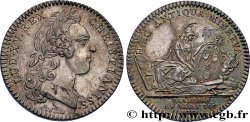
Obverse
Obverse legend : MENTE MANU QUE.
Obverse description : Buste de la France casquée à gauche, sous les traits de Minerve. Signé Dupré.
Obverse translation : Par son esprit et par sa main.
Reverse
Reverse legend : SOCIETE DES INVENTIONS ET DECOUVERTES ; À L'EXERGUE : LE 7 JANVIER 1791.
Reverse description : Inscription en six lignes dans le champ.
Commentary
Cette société fut formée en 1791 pour encourager les recherches et découvertes dans toutes les branches de l'industrie.
De toute évidence elle fut très importante et après l’introduction ci-dessous
Avec la loi du 21 août 1790 autorisant les sociétés libres, certains « artistes-inventeurs » se regroupent au sein de la Société des inventions et découvertes dès l’été 1790 pour obtenir des mesures garantissant leur propriété sur leurs inventions.
La documentation existante sur la Société des inventions et découvertes, même si elle est lacunaire, permet de la saisir à quatre moments clés de son existence : en 1791, lors du vote des lois protectrices de l’invention, puis en 1793, lorsqu’elle se met au service de la Patrie en danger, en l’an VI [1798] avec un projet de règlement particulièrement novateur, et enfin à son déclin, en 1810-1811. Elle permet aussi de mettre en évidence certains points forts de la Société ; elle montre notamment que, par la capacité de ses membres à s’organiser, elle a joué un rôle de premier plan dans l’adoption, en France, de la législation sur les brevets d’invention et, au-delà, dans l’émergence dans le débat public des gens de métier par une autre voie que la voie politique bien connue des sociétés populaires, et leur volonté de prendre en mains collectivement leurs propres intérêts.
On peut aller voir l’étude de Christiane Demeulenaere-Douyère à http://dht.revues.org/483.
This society was formed in 1791 to encourage research and discoveries in all branches of industry..
Obviously it was very important and after the introduction below With the law of August 21, 1790 authorizing free societies, certain \\\"artist-inventors\\\" grouped together within the Society of Inventions and Discoveries from the summer of 1790 to obtain measures guaranteeing their ownership of their inventions.
The existing documentation on the Society of Inventions and Discoveries, even if it is incomplete, allows us to understand it at four key moments in its existence: in 1791, when the laws protecting invention were voted on, then in 1793, when it placed itself at the service of the Fatherland in danger, in year VI [1798] with a particularly innovative draft regulation, and finally at its decline, in 1810-1811. It also highlights some of the Society's strengths; it shows in particular that, through the ability of its members to organize themselves, it played a leading role in the adoption, in France, of legislation on patents and, beyond that, in the emergence in the public debate of tradespeople by a route other than the well-known political route of popular societies, and their desire to take their own interests into their own hands collectively..
You can see the study by Christiane Demeulenaere-Douyère at http://dht. magazines. org/483
De toute évidence elle fut très importante et après l’introduction ci-dessous
Avec la loi du 21 août 1790 autorisant les sociétés libres, certains « artistes-inventeurs » se regroupent au sein de la Société des inventions et découvertes dès l’été 1790 pour obtenir des mesures garantissant leur propriété sur leurs inventions.
La documentation existante sur la Société des inventions et découvertes, même si elle est lacunaire, permet de la saisir à quatre moments clés de son existence : en 1791, lors du vote des lois protectrices de l’invention, puis en 1793, lorsqu’elle se met au service de la Patrie en danger, en l’an VI [1798] avec un projet de règlement particulièrement novateur, et enfin à son déclin, en 1810-1811. Elle permet aussi de mettre en évidence certains points forts de la Société ; elle montre notamment que, par la capacité de ses membres à s’organiser, elle a joué un rôle de premier plan dans l’adoption, en France, de la législation sur les brevets d’invention et, au-delà, dans l’émergence dans le débat public des gens de métier par une autre voie que la voie politique bien connue des sociétés populaires, et leur volonté de prendre en mains collectivement leurs propres intérêts.
On peut aller voir l’étude de Christiane Demeulenaere-Douyère à http://dht.revues.org/483.
This society was formed in 1791 to encourage research and discoveries in all branches of industry..
Obviously it was very important and after the introduction below With the law of August 21, 1790 authorizing free societies, certain \\\"artist-inventors\\\" grouped together within the Society of Inventions and Discoveries from the summer of 1790 to obtain measures guaranteeing their ownership of their inventions.
The existing documentation on the Society of Inventions and Discoveries, even if it is incomplete, allows us to understand it at four key moments in its existence: in 1791, when the laws protecting invention were voted on, then in 1793, when it placed itself at the service of the Fatherland in danger, in year VI [1798] with a particularly innovative draft regulation, and finally at its decline, in 1810-1811. It also highlights some of the Society's strengths; it shows in particular that, through the ability of its members to organize themselves, it played a leading role in the adoption, in France, of legislation on patents and, beyond that, in the emergence in the public debate of tradespeople by a route other than the well-known political route of popular societies, and their desire to take their own interests into their own hands collectively..
You can see the study by Christiane Demeulenaere-Douyère at http://dht. magazines. org/483
Historical background
ACADEMIES AND LEARNED SOCIETIES
In the 17th and 18th centuries, the academies and learned societies contributed to the influence of science, arts and literature throughout France and abroad.. They allow the dissemination of knowledge, then the ideas of the Enlightenment, and include in their ranks the most influential personalities in their field, responsible, among other things, for training future creators and scholars.. In the provinces, they constitute the essential elements of social and cultural life.. They bring together "great" and "beautiful" minds (men of letters, artists and scientists), and are endowed with official institutions (legal and material structures) which ensure their permanence, stability and legitimacy.. They are established by letters patent of the King, and most often placed under the protection of the latter.. Let us cite as an example the Academy of Sciences, Belles-Lettres and Arts of Rouen, created in June 1744 by letters patent of Louis XV. Previously, there were already meetings of botanic friends who formed an unofficial academy. Two men actively worked for the official recognition of this academy: Fontenelle, godfather of the Academy and Le Cornier de Cideville, classmate and friend of Voltaire.. Many members of this Academy are famous: Chardin, Pigalle, Parmentier, Necker, Victor Hugo or Abbé Cochet.. Reading tips: BARRIERE P. , "The Academy of Bordeaux, center of international culture in the 18th century (1712-1792)", Bordeaux, 1951; COUSIN J. , "The Academy of Sciences, Literature and Arts of Besançon" (1752-1952), Besançon, 1954; TAILLEFER M. , "An Academy Interprets Enlightenment. The Academy of Sciences, inscriptions and belles-lettres of Toulouse in the 18th century", Paris, 1984.
 Report a mistake
 Print the page
 Share my selection
 Ask a question
 Consign / sell
Related articles
 Full data


cgbfr.com numismatists


