


bga_1119980 - SENONES (Area of Sens) Statère en électrum au triskèle, type de Chenôves

900.00 €(Approx. 1044.00$ | 774.00£)
Quantity
Add to your cart

Type : Statère en électrum au triskèle, type de Chenôves
Date: c. 70-50 AC.
Metal : electrum
Diameter : 17,5 mm
Orientation dies : 12 h.
Weight : 6,73 g.
Rarity : R2
Coments on the condition:
Flan ovale et centré. Usure régulière. Patine de collection
Predigree :
Provient de la collection du Colonel Jean-Paul Beaulieu
Obverse
Obverse legend : ANÉPIGRAPHE.
Obverse description : Tête humaine laurée à gauche, la chevelure stylisée ; grènetis.
Reverse
Reverse legend : ANÉPIGRAPHE.
Reverse description : Cheval galopant à gauche ; au-dessus du cheval, l'aurige ; triskèle sous le cheval.
Commentary
Monnaie illustrée dans le Nouvel Atlas des Monnaies Gauloises. Ces monnaies du type de Chenôves se divisent en trois types ; à la lyre (classe I), à la rouelle (classe II) ou au triskèle (classe III).
Ce statère de la classe III correspond exactement au DT. 3181. Un exemplaire de cette classe et provenant du trésor de Chenôves présente un cheval androcéphale (n° 11 du musée de Mâcon).
Ce sont Louis-Pol Delestrée et Nicolas Manios, dans leur article “Un nouveau dépôt d’outils monétaires, retour sur les monnayages des Sénons” ( CN n°235, mars 2023), qui réattribuent ce monnayage jusqu’alors considéré comme Eduens, aux Sénons.
Coin illustrated in the New Atlas of Gallic Coins. These coins of the Chenôves type are divided into three types: with a lyre (class I), with a wheel (class II), or with a triskelion (class III). This stater of class III corresponds exactly to DT. 3181. An example of this class, from the Chenôves hoard, features an androcephalic horse (no. 11 in the Mâcon museum). It was Louis-Pol Delestrée and Nicolas Manios, in their article “A New Hoard of Coinage Tools: A Look Back at the Coinage of the Senones” (CN no. 235, March 2023), who reattributed this coinage, previously considered to be Aedui, to the Senones.
Ce statère de la classe III correspond exactement au DT. 3181. Un exemplaire de cette classe et provenant du trésor de Chenôves présente un cheval androcéphale (n° 11 du musée de Mâcon).
Ce sont Louis-Pol Delestrée et Nicolas Manios, dans leur article “Un nouveau dépôt d’outils monétaires, retour sur les monnayages des Sénons” ( CN n°235, mars 2023), qui réattribuent ce monnayage jusqu’alors considéré comme Eduens, aux Sénons.
Coin illustrated in the New Atlas of Gallic Coins. These coins of the Chenôves type are divided into three types: with a lyre (class I), with a wheel (class II), or with a triskelion (class III). This stater of class III corresponds exactly to DT. 3181. An example of this class, from the Chenôves hoard, features an androcephalic horse (no. 11 in the Mâcon museum). It was Louis-Pol Delestrée and Nicolas Manios, in their article “A New Hoard of Coinage Tools: A Look Back at the Coinage of the Senones” (CN no. 235, March 2023), who reattributed this coinage, previously considered to be Aedui, to the Senones.
Historical background
SENONES (Area of Sens)
(2nd - 1st century BC)
The Sénons, whose name means the sages or the elders, controlled a vast territory which extended between the south of Champagne and the north of Burgundy. Their main oppidum was Agedincum (Sens) which still retains the name of the ancient civitas today. They had several other oppida like Auxerre, Tonnerre or Avallon. Divona seems to have been the principal sanctuary of the Senones. Caesar had wintered six of his legions in 53 BC at Agedincum. Labienus, Caesar's lieutenant and legate, came to settle in the region of Sens between Gergovie and Alesia in order to control the roads and protect Caesar's armies from an attack from the Belgians or the Germans. Caesar (BG. II, 2; V, 54, 56; VI, 2, 3, 44; VII, 4, 10, 11, 34, 56-59, 62, 75). Ptolemy (G. II, 8, 9).
 Report a mistake
 Print the page
 Share my selection
 Ask a question
 Consign / sell
Related articles

 Full data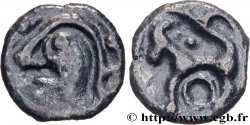


Your Recently Viewed Items

SENONES (Area of Sens) Statère en électrum au triskèle, type de Chenôves XF
900.00 €
cgbfr.com numismatists


