


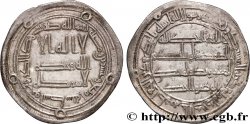
Live auction - fwo_1054294 - UMAYYADS - HISHAM Dinar d’or 735 Syrie, Damas

You must signin and be an approved bidder to bid, LOGIN TO BID. Accounts are subject to approval and the approval process takes place within 48 hours. Do not wait until the day a sale closes to register. Clicking on "BID" constitutes acceptance of the terms of use of cgb.fr private live auctions.
Bids must be placed in whole Euro amounts only. The sale will start closing at the time stated on the item description; any bids received at the site after the closing time will not be executed. Transmission times may vary and bids could be rejected if you wait until the last second. For further information check the Live auction FAQ
All winning bids are subject to a 18% buyer’s fee.
All winning bids are subject to a 18% buyer’s fee.
| Estimate : | 800 € |
| Price : | 580 € |
| Maximum bid : | 650 € |
| End of the sale : | 02 December 2025 18:59:31 |
| bidders : | 6 bidders |
Type : Dinar d’or
Date: AH. 118
Date: 735
Mint name / Town : Syrie, Damas
Metal : gold
Millesimal fineness : 1000 ‰
Diameter : 20 mm
Orientation dies : 6 h.
Weight : 4,25 g.
Rarity : R1
Obverse
Obverse description : Légende circulaire ; au centre, légende en trois lignes.
Reverse
Reverse description : Légende circulaire ; au centre légende en trois lignes.
Commentary
Le nom du dinar vient, par le Syriaque, de denarius aureus (denier d'or). Créé en 696-697 (an 77 de l'Hégire) par le calife Abd el Malik, il a pour modèle le solidus byzantin. Longtemps frappé uniquement à Damas, la capitale, il est alors inutile d'indiquer l'atelier sur les pièces. La masse choisie, 4,25 grammes environ, est fondée sur la masse arabe d'un metqäl, mais correspond en même temps à la moyenne des masses d'un assez grand nombre de solidi alors en circulation donc un peu usés et n'ayant plus leur masse théorique de 4,5 grammes. D'après la loi dite de Gresham - la mauvaise monnaie chasse la bonne - cette très légère différence devait être un élément favorable à une rapide diffusion du dinar, au détriment du solidus..
The name of the dinar comes, via Syriac, from denarius aureus (gold denarius). Created in 696-697 (year 77 of the Hegira) by the caliph Abd el Malik, it is modeled on the Byzantine solidus. For a long time minted only in Damascus, the capital, it was then unnecessary to indicate the mint on the coins. The chosen mass, approximately 4.25 grams, is based on the Arabic mass of a metqäl, but at the same time corresponds to the average of the masses of a fairly large number of solidi then in circulation, therefore a little worn and no longer having their theoretical mass of 4.5 grams. According to the so-called Gresham's law - bad coin drives out good - this very slight difference was to be a favorable element for a rapid diffusion of the dinar, to the detriment of the solidus.
The name of the dinar comes, via Syriac, from denarius aureus (gold denarius). Created in 696-697 (year 77 of the Hegira) by the caliph Abd el Malik, it is modeled on the Byzantine solidus. For a long time minted only in Damascus, the capital, it was then unnecessary to indicate the mint on the coins. The chosen mass, approximately 4.25 grams, is based on the Arabic mass of a metqäl, but at the same time corresponds to the average of the masses of a fairly large number of solidi then in circulation, therefore a little worn and no longer having their theoretical mass of 4.5 grams. According to the so-called Gresham's law - bad coin drives out good - this very slight difference was to be a favorable element for a rapid diffusion of the dinar, to the detriment of the solidus.
Historical background
UMAYYADS - HISHAM
(724-743/ AH 105-125)
Hashim is the tenth caliph. He succeeded Yazid II (720-724). Under his reign, the Arabs were stopped by Charles Martel near Poitiers. This is the time when the Umayyad Empire is experiencing its greatest expansion. Less than ten years after Hashim's death, the Umayyad Caliphate disappeared.
 Report a mistake
 Print the page
 Share my selection
 Ask a question
 Consign / sell
Related articles
 Full data
Your Recently Viewed Items
MASSALIA - MARSEILLE Obole MA, tête à gauche VF/XF
19.00 €
SAN MARINO COFFRET Euro BELLE ÉPREUVE 2009 Proof set
50.00 €
ROUYER - XI. MÉREAUX (TOKENS) AND SIMILAR COINS Méreau de Tournai AU
83.00 €
ISRAEL Médaille, Création de la R:. L:. Bereschit à l’Orient de Jérusalem
100.00 €

SECOND EMPIRE Médaille, Indépendance italienne, tirage uniface de l’avers XF
69.00 €
GREAT-BRITAIN - GEORGE II 2 Pence 1746 MS64 PCGS
120.00 €
cgbfr.com numismatists


